Ayn Rand’s “Atlas Shrugged”

I began reading Atlas Shrugged, by Ayn Rand, on the flight from Portland to Los Angeles on the outset of my 6-month sabbatical with my wife.  I completed the 1,074 page novel on the flight to New Zealand at the conclusion of our European-leg of our trip.  WHAT A GREAT BOOK!  My only regret is that I didn’t read it sooner.  I was originally given this boheamouth of a book by a close friend after graduating from college but was always to intimated to start it.  I think this book makes an excellent gift to any college graduate!

The story follows the trials and tribulations of the US economy during a fictional period in which an overwhelming wave of socialist/ communist ideology comes to fruition.  As new economic policies are implemented the story follows the impact they have on “industrialists” who share a common conviction of free enterprise.  Through the dialogues Rand is able to articulate her own conviction for the tenants of “objectivism“, which is a philosophy she is credited for pioneering (or at least giving a title). 

There are two epic dialogues in the book that do well in summarizing Rand’s philosophy in my opinion.  If you do nothing else, find the book and read these two sections:

-The first occurs on pages 382-386 where the character Francisco d’Aconia, an industrialist, speaks to a group of “socialist” thinkers at a cocktail party.  Here is an excerpt:
    “Money is your means of survival.  The verdict you pronounce upon the source of your livelihood is the verdict you pronounce upon your life.  If the source is corrupt, you have damned your existence.  Did you get your money by fraud?…If so, then your money will not give you a moment’s or penny’s worth of joy.  Then all the things you buy will become, not a tribute to you, but a reproach; not an achievement, but a reminder of shame.”

“They say it’s hard for man to agree.  You’d be surprised how easy it is- when both parties hold as their mutual absolute that neither exists for the sake of the other and that reason is their only means of trade.”

“Did it occur to you, Miss Taggart…that there is no conflicts of interests among men, neither in business nor in trade nor in the most personal desires- if they omit the irrational from the view of the possible and destruction from their view of practical?  There is no conflict, and no call for sacrifice, and no man is a threat to the aims of another- if men understand that reality is an absolute not to be faked, that lies do not work, that the unearned cannot be had, that the undeserved cannot be given, that the destruction of a value which is, will not bring value to that which isn’t.” 

-The second occurs near the end of the book (pages 927-984) and for me is the pinacle of the story.  It is a speech given by John Galt to the nation given as a radio address.  Here is an excerpt:
    “Do not say that you’re afraid to trust your mind because you know so little…  Live and act within the limit of your knowledge and keep expanding it to the limit of your life…  Accept the fact that you are not omniscient, but playing a zombie will not give you omniscience- that your mind is fallible- that an error made on your own is safer than ten truths accepted on faith, because the first leaves you the means to correct it, but the second destroys your capacity to distinguish truth from error.”

and

    “Happiness is the successful state of life, pain is the agent of death.  Happiness is that state of consciousness which proceeds from the achievements of one’s values.”

Here are some other notable excerpts:

-Dagny Taggert asks Francisco, “…what’s the most deprived human being?”  His reply: “The man without purpose.”

-Francisco speaking to Mr. Reardon (two industrialists) on the subject of gaining trust-
    “…I don’t like people who speak or think in terms of gaining anybody’s confidence.  If one’s actions are honest, one does not need the predated confidence of others, only their rational perception.  The person who craves a moral blank check of that kind, has dishonest intentions, whether he admits it to himself or not.”

-Dr. Stadler speaking to Dagny on 1st sight of the motor reminents-
    “…do you know the hallmark of the second-rater?  It’s resentment of another man’s achievement.  Those touchy mediocrities who sit trembling lest someone’s work prove greater then their own.  They have no inkling of the loneliness that comes when you reach the top.  The loneliness for an equal- for a mind to respect and achievement to admire.  They bare their teeth at you from out of their rat holes, thinking that you take pleasure in letting your brilliance dim them- while you’d give a year of your life to see a flicker of talent anywhere among them.  They envy achievement, and their dream of greatness is a world where all men have become their acknowledged inferiors.  They don’t know that their dream is infallible proof of mediocrity, because that sort of world is what the man of achievement would not be able to bear.  They have no way of knowing what he feels when surrounded by inferiors- hatred?  No, not hatred, but boredom, of what account are praise and adulation from men who’m you don’t respect?…”

-Dagny Taggert’s principle-
    “Place nothing above the verdict of your own mind.”

-Dagny observing the luxury of simplicity she experienced in Mulligan’s home:
    “There was an art of luxury about the room, but it was the luxury of expert simplicity; she noted the costly furniture, carefully chosen for comfort…  There were no superflous objects, but she noticed a small canvas by a great master of the Renaissance worth a fortune, she noticed an oriental rug of a texture and color that belonged under glass in a museum.  This was Mulligan’s concept of wealth, she thought- the wealth of selection, not of accumulation.”
New Zealand

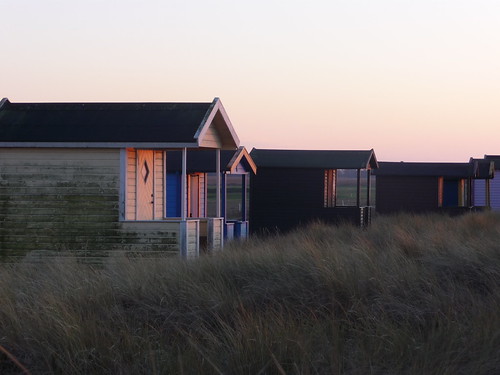
Tina and I are settled into our “batch” and enjoying the laid back lifestyle here in New Zealand! In case you’re curious to know where we are exactly we are staying in a small home (about 500 sq. ft) in Red Beach, which is a small coastal town about 30 minutes drive from Auckland (you can click this link to view on a map).

Our batch is about a 5 minute walk to the beach. The deck of our batch has a beautiful view of the ocean so when it’s not windy this is where we spend our time.

The Northland is fantastic. Yesterday we went for a long hike at the Tawharanui regional park which is a huge nature perserve with remote beaches.

On the drive back we stopped in a charming little town and had lunch. We haven’t been able to upload any photos yet but when we do we’ll post them here.

Professional lesson from Anders!

I know I’m not supposed to be thinking about my professional life while I’m on this 6-month sabbatical but I couldn’t help it. I got a great lesson from Anders Brantberg while we were staying with him in Southern Sweden and I wanted to record it.

In Tina’s previous post she mentioned that we had the pleasure of staying with Anders & Mia Brantberg in their hometown of Fasterbo, Sweden. We had a great time and are very thankful for their generous hospitality.

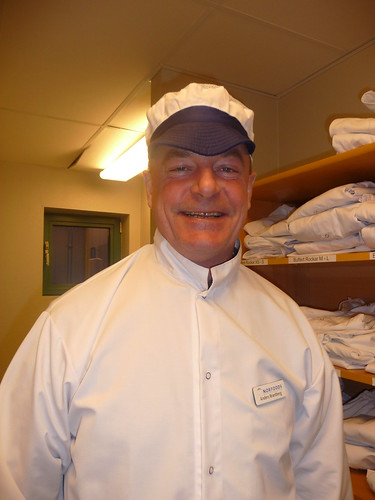
One of the afternoons we were there Anders took us into Malmo for a tour of his company Norfoods. Anders is the CEO of Norfoods which is a leading Nordic food importer & distributor with revenues of over $100 million.

Over the time Anders has owned the company they have achieved consistent growth by building strong lasting relationships with their clients.

They’ve achieved these relationships by providing expertise to their clients and not by becoming the “lowest-cost” provider (although their prices are competitive). As Anders explained competition over the past decade has forced many of his clients to cut their research and development departments. These R & D departments were responsible for developing new flavors and recipies for their food products.

Norfoods saw this as an opportunity. They hired many of these R & D experts and made them account managers. By doing so, Norfoods has positioned themselves as a food provider that is not only able to provide products at a competitive price, but is also to provide value in the form of R & D expertise.

In accomplishing this Anders believes he has been able to strengthen his relationships with his clients which will help him achieve growth in the future.

The lesson? For me, the lesson here for businesses is to look at that marketplace in which they serve and try to find problems that are common amongst the participants. In Anders case he was able to identify that his clients were having to cut back on R & D.

Then, look for ways to help the marketplace solve this problem in addition to providing the basic service or product that you already provide. This will create a “value-added proposition” that strengthen your relationship with your clients. Thanks Anders!

Drunk on Swede “creative-aid”

Written by my wife Tina (who is a graphic designer/ artist):
P1000885

I have been thirsty for visual inspiration and have been provided the opportunity to drink the creative juice everyday of our adventure thus far. And boy, does it taste good. Thank goodness Evan has been generous in every situation to allow me the window seats in planes, trains and automobiles and is constantly waiting for me to catch up as I try to freeze frame the goodness with my pocket camera. I think Evan’s been drinking the “creative-aid” too. Just yesterday as the sun was setting I was commenting how nice the light was and before I knew it he had bundled up and headed out the door to “freeze frame” it himself. He returned with several very nice shots with unique angles and perfect light. So, I guess we are both drunk on all the amazing things we have seen.

We have spent the last few days with our family friends Anders and Mia Brantberg in Falsterbo, Sweden (nearly on the tip of southern Sweden). The connection with the Brantberg family goes back to the early 1970’s when Anders ventured to Pocatello, Idaho for an student-exchange and ended up living with my mothers family. Thirty years later, his son Mikael came to live with my family when I was a senior in high school and the relationship between families has remained strong despite the distance in geography ever since. Anders and Mia wined and dined us and took us on adventures along the southern coast of Sweden.They were generous hosts and we feel fortunate to have been able to spend a few days with them.

About a year ago, my friend Molly J. introduced an artist/architect to me by the name of Joseph Frank. What I knew of him was his beautiful fabrics and his Swedish roots. Serendipitously, Joseph Frank was actually from Austria (which I did not know in addition I spent my semester abroad in Austria in college so I have a special connection to that place and it’s artists) and spent much of his time after the 30’s in Falsterbo, Sweden where he also built several homes. Mia is also very found of Joseph Frank and had the most wonderful collection of his pieces from furniture to fabric. Their home was eye candy for someone like myself not only with all the wonderful Frank pieces but lovely design and use of space and color. (MJ you would have loved it.) I began dreaming of a home someday similar to what I had seen. The Scandinavian design sense has made an impression on me for sure. I will be taking a bit of it home with me.

Danish realtors change pricing model

While reading the Copenhagen Post on Monday morning I came across this article which explains how Danish real estate agents are changing their pricing models to reflect the current state of the market.

Like the US housing market Denmark has also entered a period of slower sales.  As a result, some real estate professionals are abandoning the traditional model of commission-only compensation where they are paid only when the home sells.  Instead, they are implementing a fee structure where they pass along marketing expenses to home-owners while the home is on the market.

Kind of interesting.

Darkness Reveals Light

Written by my wife Tina:

Arriving by night in an unknown place can be a very challenging aspect to travel. For some reason Evan and I have managed to book the initial stages of our travels by night. Not only is the new destination a completely new navigational challenge on a map and on foot, the darkness adds a whole different challenge…and yet I have discovered, an amazing reward.

I have decided that arriving by night is the best way to come into an unfamiliar place as it leads much to the imagination which often times is squelched in daily life. At night often times the streets are quiet, the lights low, the colors have not yet revealed themselves and the smells (oh so prominent in Europe) have not yet wafted from the rafters.

By morning the city comes alive and the expectations of what would be revealed are totally different from what I first imagined–sometimes good and sometimes bad. Either way it’s nice to be surprised.

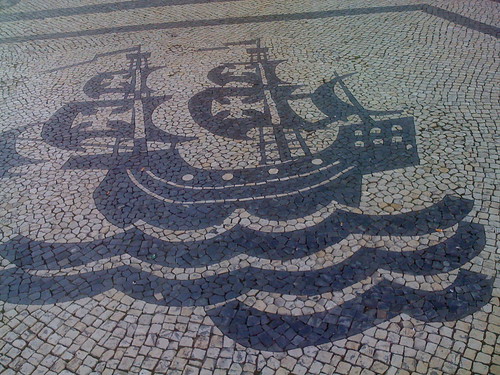
Cobbled stone streets of Lisbon

Tina and I have spent the last 3 days in Portugal. One aspect of Portugal that is different from the other places we’ve visited in Western Europe is the Moorish influence.

As we learned on our walking tour the Moors conquered much of the Iberian peninsula (present day Spain and Portugal) and ruled for several decades in the 8th century.

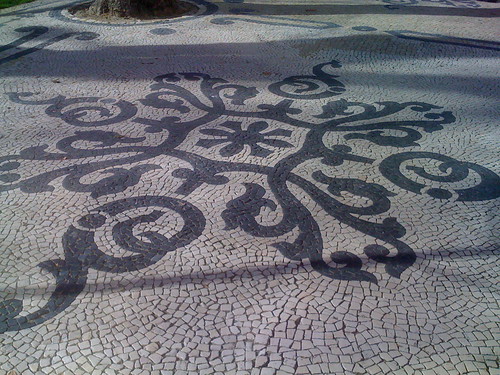
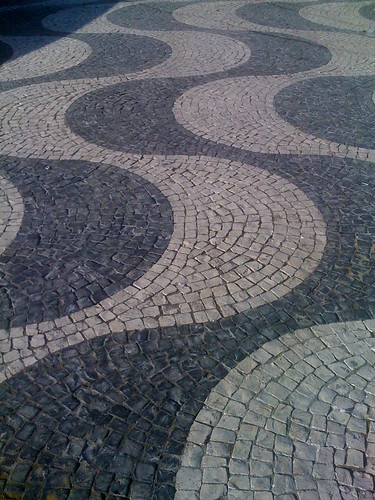
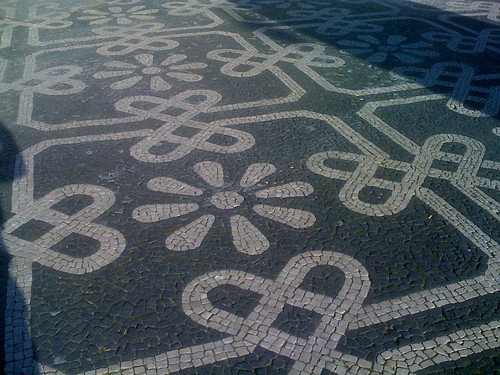
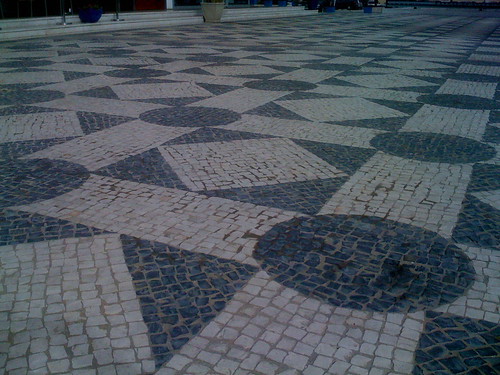
One of the areas in which you can see the Moorish influence today is in the cobbled stone streets of Lisbon. Although skateboarders must hate them they do offer a nice touch to this city. Here are a few pictures for you to see. you can view all the patterns by clicking this link.

pattern 4

pattern 12

pattern 1

pattern 19

pattern 6

Ode al Mullet de España

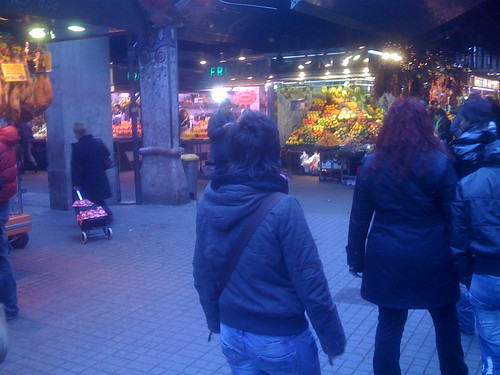
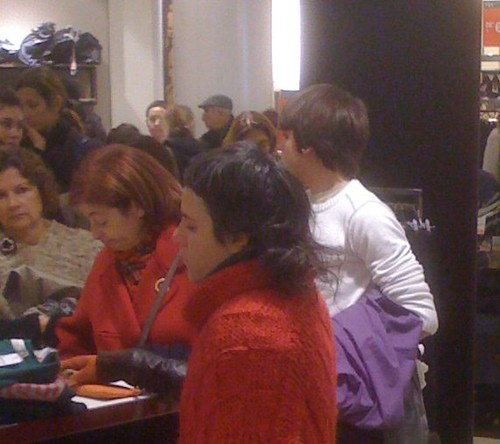
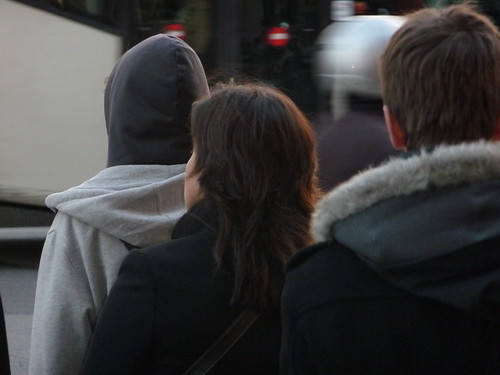
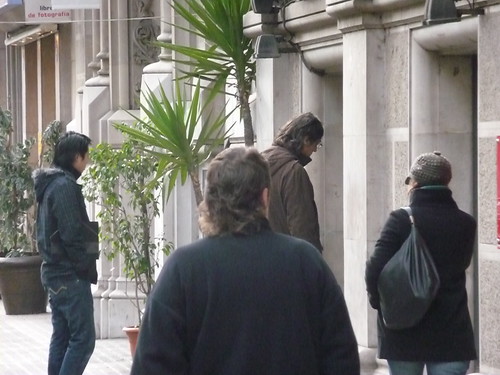
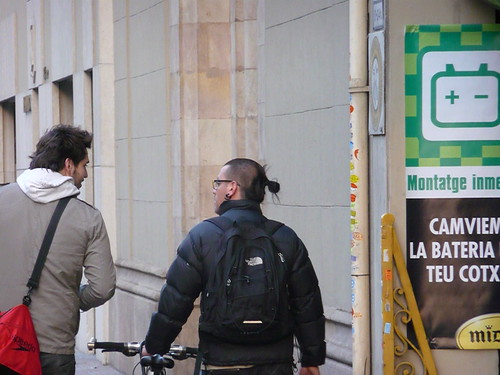
While in Spain I became aware of a new sport that I am now very fond of. It is the sport of “Mullet hunting” and the native urban habitat of Barcelona proved to be extremely fertile. Here are some photos of my trophy catch:

Mullets in the market

Sweet Mullet in Spain Department store

mullet sighting number 2

another spanish mullet

mullet sighting number 3

another mullet

spanish mullet

yes, another one

Underground Mullet (on subway)

yes, another mullet

Air Mullet

Mullet with backpack

Beloved Bar”th”elona

Following our time in Italy we embarked for Barcelona, Catalania, Spain. Upon our arrival to Barcelona we did not have much in the way of expectations. I had heard of Barcelona but knew little about its size, culture, and orientation. Now that we’ve visited this city I can honestly say that even if we had held expectations I am certain they would have been exceeded.

Barcelona is a huge city (over 1.5 million inhabitants) with a very modern and metropolitan feel. A simple walking tour through one of the central districts is enough to understand this city’s rich architectural background, creative energy, and culinary prowess.

We arrived in Barcelona late on Monday night. Fortunately, the apartment we rented for the week, located in the L’Eixample district, was easy to find so we had no trouble locating and checking in that evening.

3176778381_bd682f48f6_mOn Tuesday we awoke and oriented ourselves to this new city. We first walked up to La Sagrada Familia which was only a few blocks from our apartment. This amazing structure was originally designed by Barcelona’s most famous architect Antoni Gaudi. Construction on this structure originally began in 1882 and continues today. Under the current plan it is not expected to be completed until 2026!

For me, La Sagrada Familia was the most interesting site we visited. In terms of size this cathedral is similar to the larger basilicas found throughout Italy. However this building differs from those in that the surrealistic & natural architectural themes create a much more modern design aesthetic.

What was also interesting for me was considering Gaudi’s thought process in designing this building. In stark contrast to modern society’s need for “immediate gratification” he designed and began construction knowing that he would pass well before the completion of this signature work that will become his legacy for future generations to experience. This is a must see Barcelona landmark.

The rest of the day on Tuesday was spent walking around the L’Eixample district and indulging in a great meal at La Rita restaurant which we’d highly recommend to other Barcelona travelers.

3187688884_5afcb2056a_mOn Wednesday we decided to venture out on a walking tour. From our apartment we walked to two other Gaudi designed buildings. After viewing the exterior of La Pedrera we toured the inside of Casa Batillo that was designed and built by Gaudi in the early 1900’s. The interior tour provided us with an even better understanding of Gaudi’s naturalistic influences.

From Casa Batillo we walked down to Barecelona’s most prominent open air market (Mercat de la Boqueria) right off La Rambla. The market was bustling with purveyors of produce, seafood, breads, meats, candy, and nuts. We enjoyed the culinary experience and returned later that afternoon to purchase local goods that we used in preparing our dinner that evening.3187726052_9a6f9eab06_m

After viewing all that mouth watering food our stomachs began to call for sustenance. We continued walking towards the water and turned east for the La Ribera District. We had a great tapes lunch at El Xampneyet amongst many other Barcelonans. The lunch concluded with some tangy boquerons en vinagre (white anchovies in vinegar).

From there we ventured up a couple blocks to Museo d’ Picasso. Although there are not many of his famous pieces here the collection offers an excellent cross-section of his work which starts with his more traditional portraits of his student days and progresses to his more abstract creations which he made in the latter years of his life.

On Thursday we continued our art tour by visiting the Museum of Contemporary Art. We viewed their permanent collection which featured pieces of diverse mediums including paintings, sculpture, graphic design, 3-D design, photography, and film. Among the many interesting piece’s on display I especially liked Marcel Broodthaers’ piece entitled, “A Cast of Dice Will Never Abolish Chance” (mainly because of its title).

After touring the museum we strolled through the thin streets of the El Raval district. It was here that we happened upon a small art shop called Siesta. After looking over the many wonderful works of art we ended up purchasing a piece by Mercedes Rodrigo who happened to be in the store at the time we purchased it. 3187801778_3361ea11c5Assuming that our Spanish was sufficient she’ll be shipping it home to Portland in the coming days. We’re excited to have a permanent memento in our home to symbolize our time spent in this great city.

After lunch we ventured up to Park Guell on the subway. This park is situated in the hills north of Barcelona proper and offers amazing views of the city landscape much like the Rose Garden does in Portland. It was here that Tina snapped this photo of me in my Rudy Fernandez shirt that has been submitted to the Blazers’. I’m hoping that they’ll broadcast it in their “wear in the world” segment during an upcoming televised blazer game (so keep your eye’s peeled).3186973311_738ea688ca

The Park was originally designed by Gaudi and is one of his only landscape architectural works. This is also where he spent the last 20 years of his life (Gaudi died unexpectedly in 1926 when he was struck by a garbage truck in Barcelona). The design of the park features many of the natural influences which are also evident in his structural designs.

Thursday afternoon we met up with my childhood friend Mike Diamond. Mike and I went to middle school and high school together. He is currently living in Barcelona (by sheer coincidence his apartment was only 2 blocks from where we stayed) and in the middle of an intensive 11-month MBA program. It was great to spend the evening with him and learn more about his insights into this great city.3187023133_3bc9d2a082_m

On Friday we took it easy and prepared for our travels to Portugal. Barcelona is a great city that I would highly recommend to other European travelers.

To see more photos of our visit to Barcelona click here and/ or here.

A pragmatic impression of Italy

In visiting Italy it is impossible not to be awestruck by the rich traditions of art & culture.  The awesome basilicas, astonishing art, and amazing cuisine are all impressive in their own right.  However, on this visit to Italy I was impacted by a much less romantic aspect of Italian life.
As we mentioned in our previous post, we were very fortunate to experience Italy with our Italian friends Edoardo and Odile.  Their families generously opened up their homes to us which offered us an inside perspective on Italian life.
What struck me in observing their household habits was that they are much more resourceful and efficient than we are in America.  Here are a few observed examples:

-Transportation: You will find much smaller and much more efficient cars in Italy.  This is probably due to two factors.  First, the cost of gasoline is the equivalent of approximately $5.55 per gallon (aprox. 1.09 euro per liter).  Second, the roads in Italy are much smaller especially in older town centers.  Either way, Italians have learned to manage by using smaller cars and by utilizing public transportation.

-Energy:  In addition to gasoline household energy is also much more expensive in Italy than in the US.  As a result, Italian households are extremely efficient.  In fact, on average, Italians consume about 40% of the energy that Americans do.

In all the homes we visited all doors to rooms were kept shut (to keep heat in the room) and lights were only used in areas which were occupied.  Furthermore, only rooms that were lived in were heated.
To save money, both Odile’s & Edoardo’s parents used wood instead of electricity or natural gas to heat their homes.  Edoardo’s mom even used wood for her stovetop to prepare food (which also provided heat for the kitchen).

wood burning stove for Polenta

In talking with Odile’s father he pointed out that local residential building codes were recently updated to require new homes to be built with double walls for insulation as well as solar panels for energy generation.  In fact, Edoardo’s father showed me the controls to their solar panel which was used to heat their hot water tank.

-Food: In sharing meals with Edoardo & Odile’s family we witnessed a meal with very little waste.  For example, Odile’s mother made us homemade vegetable soup.  In describing how she prepared the soup she told us that she puréed the vegetables and kept the leftover solid matter to make a vegetable broth for future use (in our household we would have likely thrown the leftover solid matter in the trash).

In having dinner with Edoardo’s family we found that virtually all the leftover food from our meal was saved for composting to use in their garden (which was the source of many of the tasty dishes on the table).  One notable exception was the sausage lining which was saved to feed their cat.

In summary, Italians have successfully managed to deal with higher prices for gas, energy, and consumption by cutting back without sacrificing quality of life.  I hope to retain these lessons for my life back home.  Grazi Italy.