Gladwell’s “Outliers”

Back in February I was able to convince my friend Kevin Hill to trade me his brand new hard bound “Outliers” by Malcolm Gladwell for my well worn paper-back Atlas Shrugged.  Thanks Kevin.

I read Gladwell’s previous book entitled “The Tipping Point” a couple years ago and enjoyed his unique perspective in explaining how trends are developed.  In this latest book Gladwell shifts that unique perspective into explaining how “outlying” events develop.

For Gladwell, an “outlier” is a person or event that happens outside of the norm.  In the book he uses examples such as the Beatles’ extraordinary music ability, Bill Gate’s extraordinary technological ability, and a plane crash.

In our media-driven and at times short-sighted culture these “outlying” events are often chalked up to innate ability, in which case the pocessor of this ability is considered to be extraordinaryly lucky.  Or, in the case of a plane crash, we often think that it is the result of an extremly unlucky occurance that causes the plane to malfunction.  The common theme between these events being the fact that they are the cause of chance (be it lucky or unlucky).

However, as Gladwell explains in his book these events are anything but chance.  In fact, they are often the result of 6-7 conditions coming together to create an environment where the “outlying” event will occur.

As he explains in the case of Bill Gates, it wasn’t that Bill Gates was gifted with some innate ability to program computers.  Gates was lucky in that he was born with an IQ that was high, but certainly not higher than many other computer programmers.  When he was in high school he was given an opportunity to that many other aspiring computer programmers were not given.  He was given virtually unlimited access to a computer in which he could practice programming (at that time computer access was expensive).  With this unique opportunity he capitalized by spending 8-10 hours per day for over a year practicing.  With all his practice he developed an expertise that in other era’s may not have resulted in much of a livlihood.  But, Gates developed expertise in an industry that was ripe for rapid growth just at the right time.  Had he been born 10 years earlier or later we may not even know his name.

As Gladwell explains in this example it is not just that Gates was born with a unique ability that no one else pocesses.  Instead, he happened to be smart, given an opportunity no one else had, took advanatge of it, and was in the right place at the right time.

In the case of a plane crash they tend to occur because of a set of circumstances much different from the manner that Hollywood films portray.  They generally occur not because of a single engine malfunction but instead because of a set of 6-7 conditions.  In the book he looks at specific crashes and how they were typically the product of 3-4 technical malfunctions which in and of itself would typically not be a problem.  However, when combined with other conditions such as a tired pilot, in bad weather, at an unfamiliar airport the results turn tragic.

In the conclusion of the book Gladwell writes a fascinating chapter in which he looks back on his own family history to see what factors from previous generations played a role in who he is today.  Interestingly, he discovers that among other factors the relatively light shade of his grandmothers skin likely played a part in his families history (had it been darker she may have been a slave in the fields of Jamaica).

For me, reading the book was an old-fashioned reminder that the decisions I make on a daily basis do indeed direct the outcomes in my life.  Furthermore, the decisions that I make can also lead down a path that will influence future generations.  Here are some more notes from the book-

*Confusing maturity with ability- Especially in sports, kids who are relatively older and therefore more mature often get picked as “all-stars” or labeled as “gifted” and are often exposed to better coaching/ teaching etc.  As a result, they develop into better athletes/ students or whatever later in life.  However, at the time they are selected it may not be that they are innately more talented than other kids.  It is likely that they are slightly older and therefore a little more mature.

*10,000 hours- Gladwell notes other studies which find that 10,000 hours of study/ practice is required to become a master or expert in a certain discipline.

*A direct correlation between IQ and success- “The relationship between success and IQ works only up to a point.  Once someone has reached an IQ of somewhere around 120, having additional IQ points doesn’t seem to translate into any measurable real-world advantage.”

*Family background and upbringing play a huge role in determining the welfare of a child in their later years.

*Setbacks may temporarily delay success for an “outlier”.  However, ultiumately setbacks provide opportunities that allow the outlier to springboard ahead.

*3 qualities that make work satisfying- “Those three things- autonomy , complexity, and a connection between effort and reward- are, most people agree, the three qualities that work has to have if it is to be satisfying.”

*Cultural legacies- language can impact development- In most Asian languages the vocabulary used for numbers are much simpler than in english where they are irregular (i.e. eleven, twelve, thirteen, fourteen….twenty-one, twenty-two, etc.).  As a result, children in Asian cultures develop fundamental math skills at a much quicker pace than their American counterparts.

*Summary found on page 267- “…success follows a predictable course.  It is not the brightest who succeed…Nor is success simply the sum of the decisions and efforts we make on our own behalf.  It is, rather, a gift.  Outliers are those who have been given opportunities- and who have had the presence of mind to seize them…  They (outliers) were born at the right time with the right parents and the right ethnicity…”
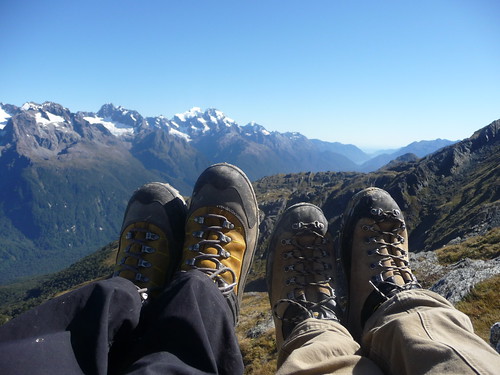
Our dogs are barkin’!

putting our feet up conical hill
Our "dogs" over the Hollyford Valley

Once again please excuse our absenteeism from the digital universe. For the past few weeks we’ve been traveling the west coast of the south island and have been out in nature exploring the amazing scenery.

I’m sure it sounds redundant by now but the natural beauty of New Zealand is remarkable. As we have ventured south the scenery seems to grow more expansive and impressive as the kilometers go by.

Over the past 2-3 weeks we’ve hiked, tramped, trekked, and backpacked to the point where we now are tending to blisters on our feet. Our dogs are barking loud and clear.

Here is a taste of what we’ve seen from north to south:

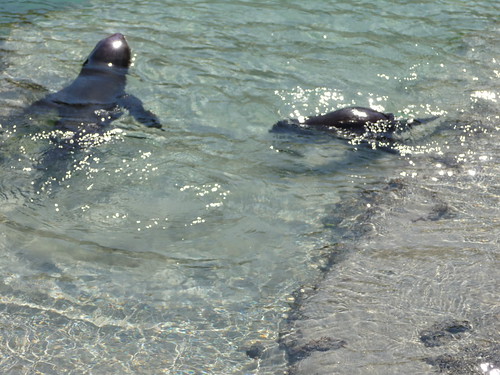
Starting out in Golden Bay we drove west and hiked into to Wharariki Beach where the wind was fierce. However, overcoming the natural elements had its rewards as we were treated to a close-up view of a family of seals lounging about the rocks while the younger pups played in a pool.

seal pups
seal pups @ Wharariki
all blacks
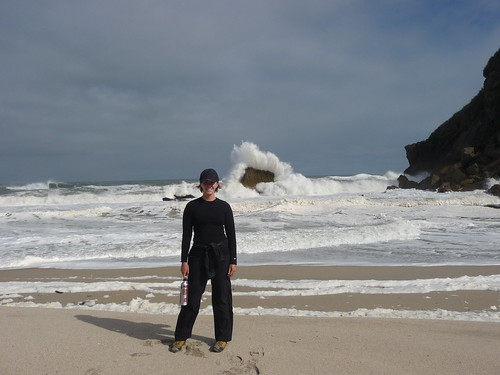
Tina on beach @ Heaphy Track

Just north of Karamea we hiked a couple hours into the Heaphy track which is tucked in between the rugged beaches and dense rain forest.

Later that afternoon we drove into the beautiful Oparara Basin where we hiked into to view a limestone arch that has been carved out by a small river over the past 35 million years.

A couple days later we hiked on the Cape Foulwind coastal walkway where the air was still and the sun was warm.

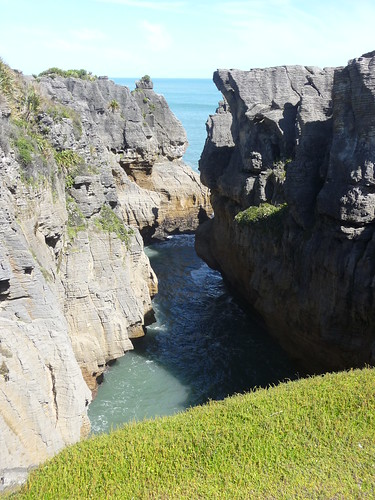
At Paparoa National Park we saw the famous pancake rocks and blowholes but also did an inland hike up over the hills and even forded the Porari River.

pancake rocks
Pancake Rocks

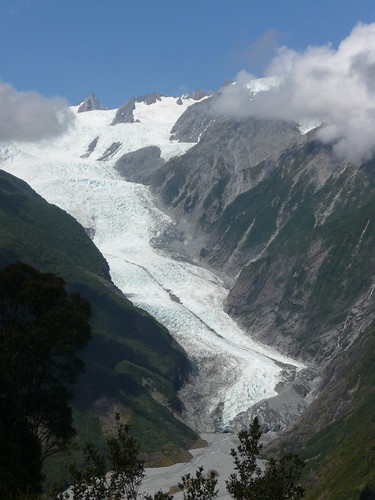
At Franz Josef we did a challenging 6.5 hour return hike up to Alex Knob above the clouds and above the buzzing helicopters where we were greeted with a beautiful day and view of the amazing glacier & the Tasman Sea. It’s a amazing that the a glacier and ocean can coexist in such proximity.

Franz Joseph Glacier
Franz Josef Glacier

Further south we stayed a couple days in Wanaka. From here we drove into Mt. Aspiring National Park via the beautiful Matukituki Valley and walked back to view the Rob Roy Glacier. Our timing was lucky because as soon as we arrived we witnessed an avalanche which was spectacular!

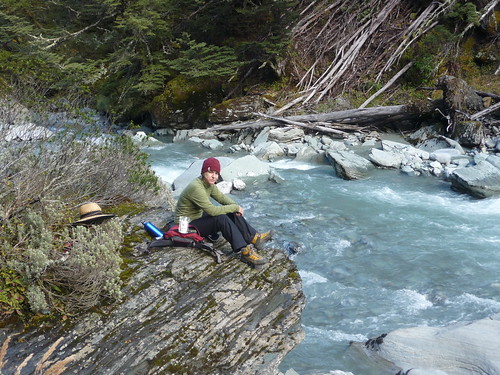
hanging out river side
Lunch by the river near Rob Roy Glacier

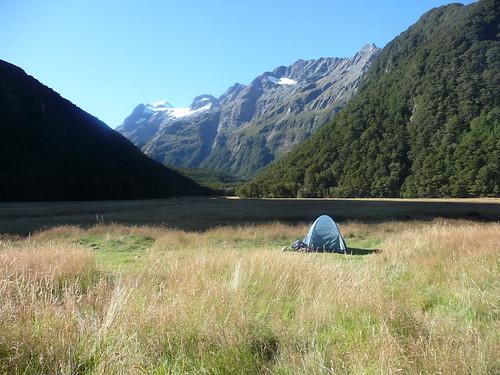
After staying in Arrowtown a night (just outside of Queenstown) we drove into the southern end of Mt. Aspiring National Park via the scenic Lake Wakatipu & Glenorchy. From here we did an overnight trip on the Routeburn Trek. Part of this area was used in the filming of the Lord of the Rings movies. The first afternoon we walked into Routeburn flats and set up camp. This is the most beautiful place I’ve ever camped.

not bad huh
Campsite at Routeburn Flats

The next morning we were on the track by 9AM and arrived on top of Conacil Hill at a quarter past noon. The views here were amazing. We could see up the Hollyford Valley all the way to the Tasman Sea approximately 20 miles away! We definitely earned our dinner that day after hiking for 8 hours!

Last week we took 4 days and did the Kepler Track in Fiordland National Park which begins at the southern tip of Lake Te Anau. From here we walked west and north and ascended past the tree line into the Kepler Mountains on our first day finishing at the Luxmore Hut. On the second day we hiked up the last 400 meters to the summit of Mt. Luxmore and then continued west along a ridge with amazing views of the South Fiord and surrounding mountains. After 3 hours we reached another lookout point and began hiking south for the Iris Burn hut tucked down in a valley below the tree line. On our third day we began our walk back toward Te Anau walking in a forested region along the Iris Burn river. Our last night was spent in the Moturau Hut on the banks of Lake Manapouri. From here we hiked out in the rain and were back to civilization.

Day 2 Kepler Trek
Begining of Day 2 on the Kepler
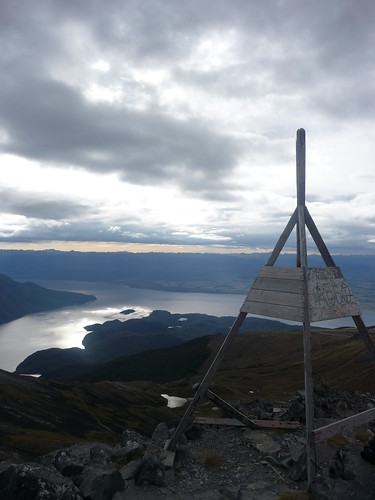
summit mt. luxemore
View from Summit of Mt. Luxmore, Kepler Track
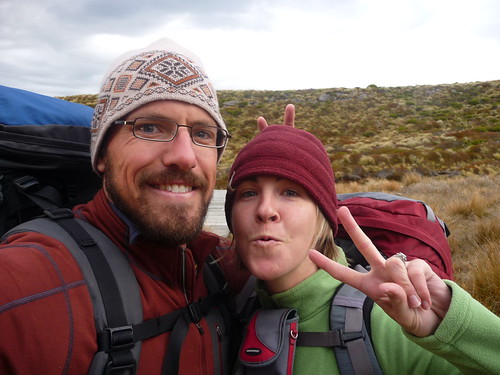
Hiding in the trees
Tina under a tree, Kepler Track

Even though we’ve been extremely active in the past few weeks we’ve really only braised the surface in terms of areas to explore. The Fiordland & Mt. Aspiring National Parks are amazingly beautiful. Both Tina and I wish we’d have more time to immerse ourselves in these areas. I guess that will be our excuse for coming back in future years.

Aqua-tales

I don’t profess to be an efficient swimmer. In fact in the one and only triathlon I ever completed I was the 2nd to last swimmer out of the water in my heat of 50 competitors (the last guy must have drowned).

However, despite my lack of efficiency I do love to get wet and NZ offers endless opportunities for recreational swimmers like myself (Doug- you would love it here).

Here are some pictures from my swimming escapades:

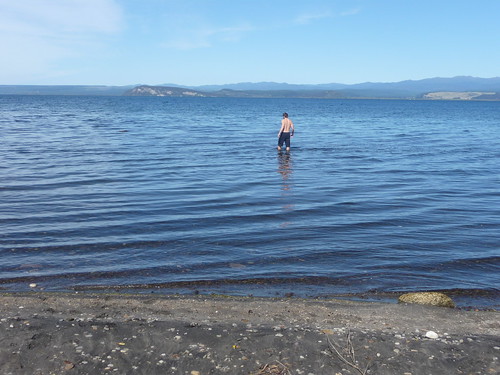
South end of Lake Taupo
Walking in for a swim @ Lake Taupo

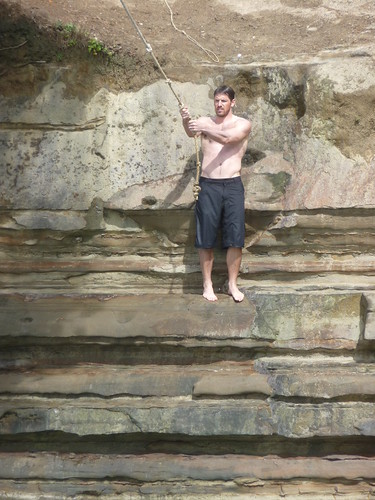
Evan Swinging
On the rope swing at "the cove" in Red Beach
daily swim for e
Tina caught this shot perfect as I enter the H2O @ Abel Tasman

Nomadic feels like home

We are alive, yes very ALIVE and doing well…We have ventured south to the south island of “ENZED” (as we now call it) and have not been disappointed yet, in fact far from it (Dear Mom, I am not coming home…). The endless scenery continues to amaze us both as we have worked our way around the rugged northwestern coast. Our journey has taken us to Golden Bay, Abel Tasman National Park, The Old Slaughter House and the Beaconstone (just some of the highlights). We find our selves now at the base of Franz Joseph Glacier for a day of recoup and checking back in with the world (Birthday Wishes to Whitney…Happy 30th, my friend!!!) before we head out for another taste of nature in a different setting.

One of the highlights of our journey thus far has been the varied places we have chosen to lay our heads and the ease of doing so in ENZED. We have not spent more than three days in one place yet we have felt very much at home. We have set our tent up at various spots along the way amongst the trees and mountains, along rivers and lakes, and along the sea. We drove into the night at Golden Bay to Shambhala to wake to sounds of birds and crashing waves, the tea house and days of yoga and meditation. We have learned about the joy of building a dream from scratch to share with other travelers of the world at the Old Slaughterhouse, and relishing in all it’s beauty from the sunny deck overlooking the wild western coast. We met new friends at the Beaconstone and watched golden sunsets, slept in silence and learned the lessons of conservation using solar power and compostable toilets. Each one of the experiences we have had have been very unique and memorable. The most interesting part of the lodges we have stayed in is there association with the backpacking network in ENZED called BBH, which is quite exceptional, extensive and inexpensive. Each place it seems has been built from the ground up and nurtured with a little ENZED hospitality and personality. We have certainly appreciated a home away from home.

‘Sweet As’

Tina and I have found our new favorite hideout in NZ (shoosh, don’t let anyone know). After ditching our digs in Red Beach we drove south on Saturday and landed in Raglan on the west coast (just west of Hamilton). This laid back little surfer town is what we imagine southern California to be like 40 years ago. It is friendly, unpretentious, and creative. It is also only a 10 minute drive to some of the best surf on this planet at Manu & Whale Bay (so we’re told- Glenn?).

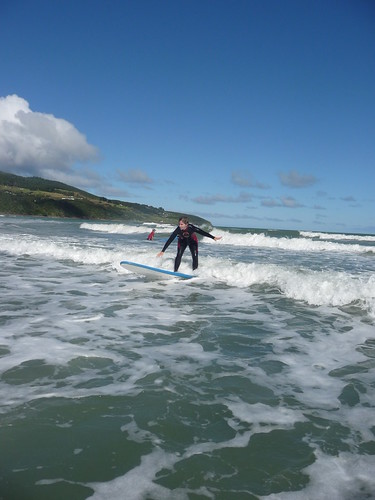
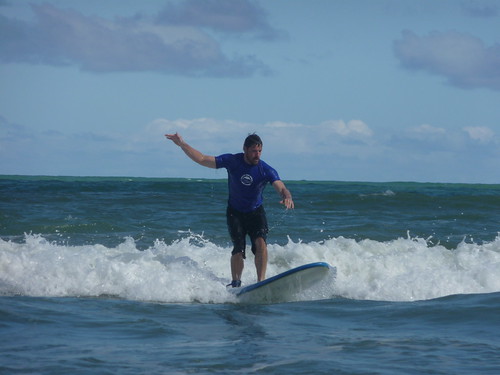
Tina had never surfed and I only once. Yesterday we took a 3 hour lesson and got beat up pretty good. Undeterred we went for round 2 this morning. The waves were a little “cleaner” and the wind a little softer. With the more manageable conditions we each managed a few good rides. Grant it, the waves aren’t huge but you have to start somewhere. Sweet as!
Getting up surfing
e catchin the wave

And the winner is….

Our sweet wheels have carried us southward without a proper name, so the time has come to award a winner for the “car naming contest.” The award goes to Jeff and Juli Labhart (and baby Kiren too) for their given name of “Hoon-Mobile” which we have taken the liberty and shortened to “The Hoon”. For those who don’t speak NewZenglish Jeff and Juli have provided a definition below…

Hoon is a derogatory term used in Australia and New Zealand to refer to a person who engages in loutish, anti-social behaviour. In particular, it is used to refer to one who drives in a manner which is anti-social by the standards of contemporary society, that is, fast, noisily or dangerously. Hoon activities can include speeding, street racing, burnouts, doughnuts or screeching tyres.[1] Those commonly identified as being involved in “hooning” or street racing are young, predominantly male drivers in the age range of 16 and 25 years.

Our congratulations goes out to the Labharts for their knowledge of “kiwi-isms”,sense of humor and just darn good naming ability. We will do our best to make sure our ride lives up to it’s name without getting ourselves locked up down here in NZ. Labharts, we will be sending your award along soon. Thanks to all who participated!

Moore’s “Bowerman and the Men of Oregon”

I ran my first and thus far my only marathon here in Portland back in October.  Tina and I trained and ran the entire marathon together (BTW, we managed to run the entire course).

Much of the credit for our successful completion of the marathon goes to Tina’s friend and palates teacher Susan Schmidt.  Susan is a super-fit marathoner herself and passed along a ton of great knowledge during our training months.  We wouldn’t have done as well as we did without her assistance and motivation.

Before departing for our 6-month trip Susan also passed along the book “Bowerman and the Men of Oregon” by Kenny Moore to read while traveling.  The book is a biography of the legendary University of Oregon track coach Bill Bowerman.  I am super thankful that Susan gave me this gem because it’s a book I probably wouldn’t pick out for myself but after reading it am very happy that I did.

Prior to reading the book I only knew a little about Bill Bowerman.  During our training for the marathon Tina and I did a lot of running at the Nike campus which is only a mile from our house.  If you didn’t know, the Nike headquarters is on “One Bowerman Drive” in Beaverton, OR.  I knew he had coached Nike founder Phil Knight (after reading the book I now know that Bowerman was a co-founder as well) at University of Oregon but knew little about his life or his legacy.

The author of the book, Kenny Moore, was coached by Bowerman at University of Oregon and became close with him and his family.  As a result, he offers a truly unique perspective into the life and times of the University of Oregon legend.

What impresses me first about Bowerman was his conviction to his principles.  The book quotes Phil Knight as commenting about Bowerman in saying, “he was always wrong on his facts and right on his principles.” There are numerous stories throughout the book about Bowerman going to bat for his athletes which he coached.  He knew what was right and wrong and grew frustrated when faced with others who didn’t share in his opinion.

In another example Moore explains Bowerman’s technique for testing a person’s character- “Assigning mundane, even menial tasks was a test that Bill often applied.  Failing it might not cause Bill to disappear a team member, but it would lead to a kind of probation.”

The second aspect of Bowerman that impresses me was his ability to put things in perspective.  Everything he did was a small piece of something bigger that would ultimately become his legacy.  Moore explains, “Bill Bowerman was designed…to process.  The defining aspect of his life was preparation, not completion.  The house was always unfinished, the big meets were always grounding for bigger, the best shoes could always be made better.”

In another part of the book Moore writes about Bowerman after contemplating a decision that kept U of O from defeating an opponent in a track meet, “Bowerman would nod and acknowledge such natural regrets, but didn’t seem to share them.  He occasionally pointed out that victory is sweet, but you wake up the next morning and it has flown.  Similarly, defeat dissolved.  Occasionally his view was so long that it seemed a kind of enlightened disinterest.”

Beyond Bowerman’s personal characteristics it was also interesting to learn about the many other areas in which he impacted Oregon, Nike, and the US as a whole.

What was interesting to read while in New Zealand was the impact that this country had on Bowerman and on the US as a whole.  In 1962 Bowerman brought a group of his Oregon men to race against a group of NZ runners led by their coach Arthur Lydiard.  Upon showing up to NZ Arthur dragged Bill out on a jog everyday for the entire 6 weeks that he was there.  Arthur had started jogging groups in Auckland as a way for people to get exercise.

Upon his return Bowerman has lost 10 pounds and 3 inches off his waistline.  He was so impressed with the NZ joggers that he began recreational running clubs in Eugene in 1962.  This is thought to be the birth of recreational running in the United States.  To quote Bowerman on the subject of exercise, “To procrastinators who complain that they cannot afford the fifteen or twenty minutes a day, I echo the words of Arthur Lydiard: You cannot afford not to take the time.'”

Prior to reading this book I always thought that Phil Knight was the sole founder and inventor behind Nike shoes.  However, it was actually Bill Bowerman while at the University of Oregon who first designed and invented the shoes that Phil Knight would make billions$ on.  Not to worry, Bowerman also made a pretty penny off of Nike stock and served on the board of directors for 25 years.

All in all, the book was a great read and would be enjoyed by any Oregonian with a passion for sports.  I would highly recommend it.

Here are a few other quotes from the book.

-The author Kelly Moore remembers, “There are few things that can compare to being young and healthy and a part of a team that you want to be on, and doing well, as well as you could, and being proud.”

-A motto taken on by Bowerman and his friends as they aged and began to lose their memories, “Hey, Alzheimer’s isn’t so bad.  You meet new friends everyday.”

-Bowerman on his philosophy of training, “That’s all training is.  Stress.  Recover.  Improve.  You’d think any damn fool could do it…”

Postcard home (written in New Zenglish)

Today the weather is mostly fine here in N-ZED. We walked out of the bach and down the road to find some good nosh. As we head north the beach is scattered with heeps of kiwis kicking back with their chilly bins and a cold glass of Sav and we think… “Sweet as“. We stop in to a cafe for a long black for takeaway. The waitress begins to chat us up and finds out we are on a six month holiday and says “Good on ya.” We head to the postie to mail some cards to our mums. On the way we witness a fender bender and the two drivers get into a barney in the middle of the road. One of the drivers is in quite in a tissy, as his Mercedes is quite flash. We leave the mess behind and head to the store to get some fresh fruit and veg, we hear that the rock melon and capsicum are in season so we decide to pick up some. We can’t forget the mince meat for our homemade pies. The woman next to is buying nappies, of which will soon become rubbish in the landfill and what a bummer that is on this beautiful island. Cheers mate, we will be home soon.

Time flies when you’re having fun!

First off, our apologies for not updating the blog as frequently as you may have become accustomed to during the European leg of our trip. Internet access is not as prolific here in NZ. Furthermore, for the most part the weather has been fantastic (75-85 degrees F) so we’ve been out exploring the natural beauty of this country.

It’s raining today so we thought this was a good opportunity to update the blog with some highlights of the past couple weeks.

The Hill’s in town-
We had a great time with Kevin & Meghan Hill over the past couple days. I played college baseball with Kevin. The Hills at Devonport Him and his wife, Meghan, are on the tail end of a 5-week vacation which had them in Australia the past 4 weeks (in some places they missed the tragic Victorian wild fires by hours). Before heading back the States they spent a couple nights with us here in Red Beach. We had an excellent visit which included some memorable meals, swimming in “the cove”, and of course the retelling of college baseball stories which our wives are probably tired of hearing but somehow never get old for us (if you’ve never heard the infamous “Home of the Warriors” story remind me to tell you next time we have a chance).

Prior to the Hills arriving Tina and I spent 5 days exploring the Northland & Bay of Islands. Here are some highlights:

Matakana Farmers’ Market-
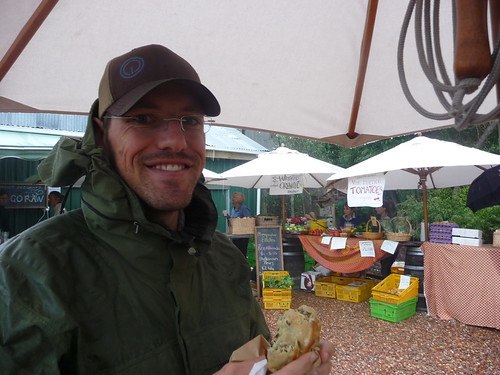
We departed on our 5-day mini-tour early on the Saturday before last and drove North on HWY 1 via Orewa to Matakana. The Saturday morning farmers’ market in Matakana had been recommended to us by a few different people as being one of the best in the region (“so get there early”). We were not disappointed. Upon arriving we grabbed some tasty pastries & coffee and had ourselves a look around. Matakana Muffin in the rain The booths at the market were bursting with locally sourced produce & gourmet confections. Although the poring rain made being outside somewhat unpleasant it also curtailed the crowds which made the experience all the more enjoyable.

We hung around long enough to purchase a couple items and hear a local dixieland jazz quartet play a few bars. One of the items we purchased was a bottle of apple-feijoa juice which was sweet, tangy, and tart. After talking with the proprietor we learned that the feijoa is a fruit mostly found in the Southern Hemisphere and is grown heavily in NZ. Yum….

Russell & The Bay of Islands-
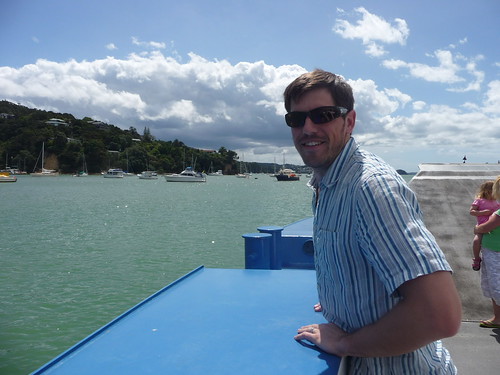
Saturday afternoon after a brief stop for lunch in Whagarei we arrived in Opua where we caught a short ferry to Russell. The weather on our drive north from Matakana had been much like a typical spring day in Oregon with rains showers and bright sunshine alternating with what seemed like every mile. Ferry to Russell But as we loaded the ferry boat bright warm sun-rays shown down and we were able to shed our layers for the trip across the bay.

In the early 19th century Russell became the first European settlement in NZ. Today, the charming small town features water-front cafe’s, art galleries, and gourmet food grocers not unlike what you might find in the San Juan Islands. Unfortunately, the sunny weather didn’t last long so Tina and I got in the car and drove South to find a camping-spot and hopefully escape the wetness.

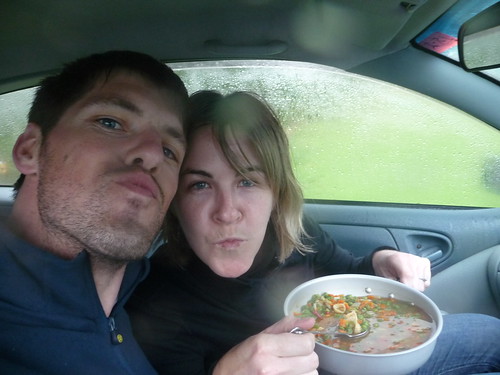
Our hope was to find a quiet scenic campsite where we could enjoy the evening and celebrate St. Valentines Day. We ended up about 30 km south and west of Russell at the scenic reserve at Whangaruru North Head. Although the setting was nice we were met with grey clouds that would open up shortly after we got done cooking our dinner. The wind and rain didn’t cease until the next morning which kept us inside the shelter of our car and tent. Soggy Valentines Dinner We did our best to make the most out of the occasion by playing tic-tac-toe on our fogged in windshield. There is no question that this will be a memorable Valentines Day for us.

Cape Reinga & Tapotupotu Bay-
After a night in Kerikeri we drove north to the tip of NZ at Cape Reinga on Tuesday morning. We were blessed to have sunny weather which created beautiful scenery. Cape Reinga marks the very northern tip of NZ and is also where the Tasman Sea meets the Pacific Ocean. The estuary where the two bodies of water collide is marked by white caps and apparently violent surf on days when the weather is stormy. We liked this area so much that we decided to stay the night nearby.

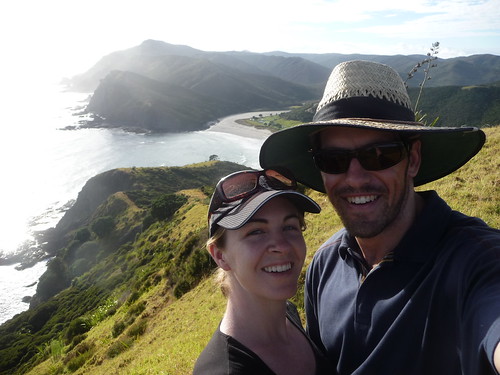
Early Morning Hike at Tapotupotu Bay After spending time at the Cape we drove east and south to Tapotupotu Bay. Descending down the windy gravel road into the bay we were presented with the beautiful setting that we’d call home for the next 24 hours. It was here that we made up for the in-climate weather we experienced on Valentines Day. The sun was bright, the temperature perfect, and the water was warm for swimming. That afternoon we took in some beach time before enjoying some dinner at our beach front location.

On Tuesday morning we got up early to watch the sunrise and go for a long hike along the coastline. We hiked northwest to Sandy Beach and back and were rewarded with incredible coastal views. By the time we got back mid-morning we had worked up a sweat and went for another swim in the bay to cool down. Very nice!

Hokianga Harbor & The Waipoua Kauri Forest-
After three nights of camping we decided to book a room and spend the night in a bed. We had been recommended the Copthorne Hotel and Resort at the Southwestern edge of Hokianga Harbor in a small town called Omapere and so booked a room and drove south. The patio of our room was situated with a beautiful view west where we could watch the Tasman Sea roll into the harbor. After a relaxing cocktail hour overlooking the water the fatigue of our early morning hike set in. We ended up ordering room service and falling asleep watching The illusionist with Ed Norton.

About 40 km south of Omapere lies the Waipoua Kauri Forest. This area is what’s left of the dense kauri forests that used to cover this region (logging and “gum-digging” have decimated much of the natural land). Wednesday evening we took a night walking tour with a local Maori guide into the forest to learn more about the natural habitat and the kauri trees which make this area famous. Te Matua Ngahere This will definitely be a highlight that Tina and I will remember for a long time. Our tour-guide Bill led us on an amazing 3-hour walk through the forest in which we learned about how the local animal and plant life helped his ancestors sustain a living over the preceding centuries.

In addition, he also took us to see some of the most amazing trees I’ve ever seen. Kauri trees have thrived in this area for thousands of years and as Bill explained provided not only practical value to the life of his Maori ancestors but also Spiritual significance as well. After seeing these trees in person it is no wonder why. They certainly have a powerful aura about them.

Although there are many gigantic 500+ year kauri trees scattered through out this forest that are magnificent to look at, none are more amazing than the Te Matua Ngahere (Father of the forest) and Tane Mahuta (Lord of the forest). Bill explained that each of these trees hold special spiritual significance in his culture and therefore he performed special prayers announcing our arrival before confronting the trees. As the darkness of the night set in and the silence of the forest surrounded us hearing his prayer made me feel like I was present during the times his ancestors occupied this land. It was a very powerful experience!

The first of the trees that we visited was Te Matua Ngahere. It stands 30 meters high and has a girth of 16 meters. The trunk is estimated to hold 208 cubic meters of kauri wood. The most amazing stat about this tree is that experts believe it is approximately 4,000 years old!!!! Take a moment to think about this. Can you think of anything else on this earth that is a living organism that is 4,000 years old? This tree is powerful, beautiful, and certainly a sight to see. It is also worth noting that Lord of the Rings film director Peter Jackson studied this tree in creating the tree character fangorn for his film.

The second tree we visited was the Tane Mahuta and is thought to be 2,000 years old (about the same age as Jesus). It stands about 170 feet high, has a girth of 13 meters, and is estimated to have 240 cubic meters of wood in it’s trunk (although it’s trunk is not as wide as Te Matua Ngahere it is much taller). This is the largest known living kauri tree and is also a beautiful sight to see. Upon leaving this tree and the Waipoua Kauri Forest Bill called upon us to pay our respects to these trees and to nature. He reminded us that nature provides life and to respect our natural surroundings as his culture has done for centuries. Since I come from a society where we often separate our existence from that of nature I was very thankful for the reminder.

That night we camped at the southern end of the Waipoua Kauri Forest near Donnelley’s Crossing. When we finally laid down in our tent and looked up to the sky we were given an awesome display of stars. Neither Tina and I are knowledgeable astronomers but looking up at the constellations visible in the southern hemisphere was none the less a special experience following our night tour.

What’s next?-
We will depart our bach in Red Beach which we’ve occupied since February 1st this Saturday and begin our journey South. For the next 6 weeks we plan to spend much of our time exploring the beauty of the South Island. We hope to do a few backpacking trips and have plenty of hikes. As a reminder, our car-naming contest is coming to an end soon. Get your entries in no later than Sunday!.

Click this link to view more photos from our NZ adventures.

WE’VE GOT WHEELS…NOW WE NEED YOUR HELP.

In order to get ourselves around the islands for the next few months Evan and I decided to purchase a car. Given that buying cars is one of our LEAST favorite activities in the states, we knew that buying a car here would also prove to be a challenge. We spent a couple of Saturday’s visiting the local car markets where cars are sold off by backpackers and locals trying to make a quick buck or get rid of their wheels before hitting the road back to their homelands.

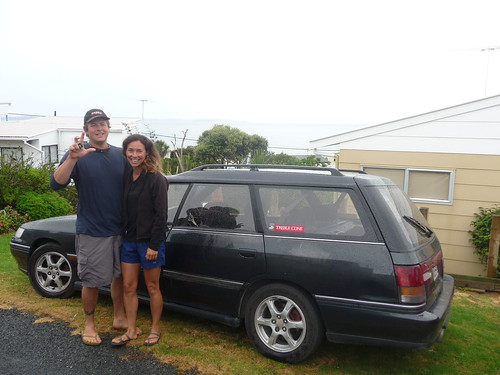
One Sunday Evan and I ventured out to the largest car market in Auckland with hopes that we would have to look no further. We spent much of the morning wandering around looking at cars and test driving several. We were unable to find anything that suited our needs at the price we could afford. As we made our last round to see if we had missed any bargains we came across a nice looking Subaru. Evan struck up a conversation with the couple who owned the car. As we got further into the conversation with them we discovered they were from the States, Minnesota of all places. (In my opinion some of the best people I know come from Minnesota, there must be something in the water there.) As I talked further with Amy I discovered she and Adam were from northern Minnesota, (hmmmmmm my dear friend Molly is from northern Minnesota). I inquired further about where and Amy said, “Well have you heard of Grand Rapids?” Well of course, I had heard of GR. My friend Molly grew up there, and Evan and I have spent a memorable weekend there for M+A’s wedding a few summers ago. Now, by this time I am beginning to think that the whole experience of meeting Amy and Adam was beginning to feel a bit serendipitous and it proved to be even more so. Amy of course knew of Molly’s family and it turns out use to cut their hair when they were younger. So, in turn we have some new wheels to get us around the islands, met some new friends who we shared a beer and a meal with and understand even more so how incredibly small the world can be.
Amy and Adam

Our “new to us” wheels are in fact quite unique given the way in which we serendipitously acquired them, but also some of the features of the new ride are quite unique as well (more on that to come below). This set of circumstances has led us to decide that we can not go on driving our new ride without a proper car name. So, we are hopping that you might be able to help us come up with a name, and because I am married to a man who always loves a little friendly competition we have decided to make a contest out of it. Why not right? So here’s the deal, the individual who comes up with the best name will be rewarded with something “kiwi-esque” sent from the islands direct to you, should YOU come up with the winning name. You can leave your entry in the comments section below. All entries must be submitted by March 1st. (We can’t keep driving without and un-named car!!!)

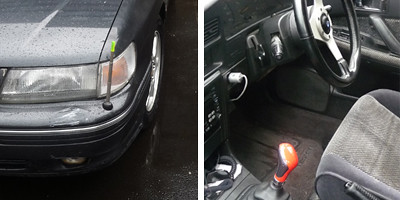
A couple of things you should know about our new ride. It’s a 1993 Subaru Legacy Turbo GT. Yes, we have TURBO. In fact, upon driving into our quiet little bach neighborhood after a hike up north one day, our neighbor commented on our new wheels and said “Wow, I thought you guys might be “Boy Racers” . In addition, it has a funny little light beam antena on the front left bumper that goes up and down with the click of a button. Beyond that, the steering wheel is something straight out of a race car. The factory stick-shift has been replaced with a red hot handle that rattles when we approach anything over 50km/h. There is a faint stench of mildew (probably given all the traveling fools who have owned the car before us.) It has 4, yes FOUR bumper-stickers all reading “Treble Cone”, slightly overkill don’t you think? (we have found out it’s a ski resort on the south island, apparently one of the owners of this car was in love with this place either that or was in marketing.) It’s dark grey in color with dark grey interior. We have included a few photos to give you a better idea, should these descriptions not be sufficient enough.

CarDetail


We hope these details will inspire to you to come up with something brilliant, and if you do, as they say down here….”GOOD ON YA!”