The N-Zed Vino Report

Prior to arriving in New Zealand Tina and I had a narrow understanding of New Zealand wines. We were familiar with some Sauvignon Blancs from the Marlborough Region but that was the extent of it.

After spending 4 months in the country we had plenty of opportunities to explore additional varietals from various regions. What we learned is that in addition to the “Sauvie-B’s” that the country is well-known for NZ has multiple wine regions which are gaining prominence on the international wine scene.

Especially when you factor in the exchange rate we felt like NZ wines were a GREAT VALUE. Here is a list of the best wines we tasted along with the price we paid for them in NZ$. To convert these amounts into US$ click this link.

Contact your local wine shop to see if you can get your hands on these.

Sauvie-B:
* Boundary Vineyards-“Rapura Rd.”- 2008- $20
* Koura Bay
* Church Road
* Rippon- 2008-
* Ata Rangi- 2008- $25
* Triplebank- 2008- $20
* Anchorage

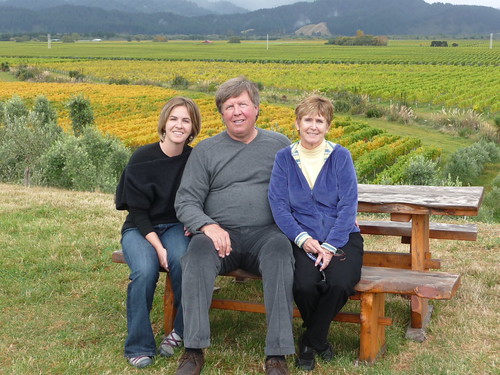
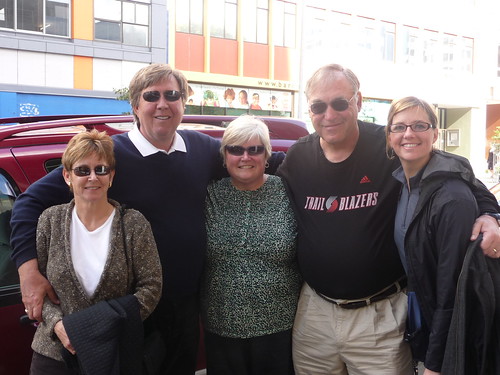
The rents and I
A couple lovely ladies with Big Mike @ Seresin Winery

Chardonay:
*Black Barn- unoaked- 2007

Gewurztraminer:
*Brookfields- 2007- $24
*Trinity Hill

Viognier:
*Trinity Hill- 2006- $30

Arneis (ancient Italian wine grape):
*Trinty Hill- 2008- $20

Pinot Noir:
*Drumsara- 2007- $50
*Seresin- “Leah”-2007-$28
* Tirohana-“Leslie”-2008- $50
* Pegasus-
* Akarua- 2006
* Mt. Difficulty- 2007- $45
*Ata Rangi- 2007- $65

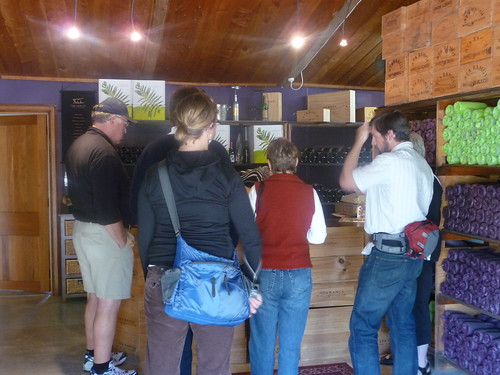
bellyin' up to the bar at Ata Rangi
Wine tasting @ Ata Rangi in the Martinborough Region

Blends:
*Pegasus- “Maestro”- $50
*Herzog- Beardeaux blend-2001- $47
*Benfield & Delemare- 2006- $75
*Ata Rangi- “Celebre”- $32

Syrah:
*Craggy Range-2004-2006- $50

Merlot:
*Unison Vineyards- “Reserve”- 2007- $30

Tempranillo:
*Trinity Hill-2007- $29

P.S. In talking with the winemaker at Unison Vineyards he advised that the 2009 harvest was poised to be a great one for the Gimblets Gravel region in Hawke’s Bay. This area is known for it’s heavier red wines such as Syrah, Merlot, and Cab-Sav. Keep your eyes open in the future for good 2009 wines from this area.

Flannery’s “The Eternal Frontier”

Over the past 4 months in NZ Tina and I have spent much of our waking moments immersed in the natural beauty which makes this country such a special place to visit.  As it does with traveling to foreign places it got me thinking about the natural treasures which are close to home that I have yet to explore.  Furthermore, I’ve come to realize that I am ignorant about the natural forces that have shaped the very environment in which we live.

It just so happened that while I was exploring another one of my favorite environments, a used book store, I came across a book by Tim Flannery entitled, “The Eternal Frontier: An ecological history of North America and its Peoples“.  Perfect.

Flannery’s book takes the reader back 65 million years when an asteroid, now known as ‘Chicxulub’, struck North America thus brining “modern” ecological history into being up to the present day where he focuses on the human impact on the environment.

For me, the first 64,999,500 years of the book were a little slow.  However, there were two themes that struck a chord with me.  First, it is remarkable how detailed of a history modern day scientists are able to create based on the limited remnants of ancient history they are given to work with.

Second, it is humbling to compare our concept of time, which is heavily influenced by the length of a human life, in the perspective of “modern” ecological history which spans 65 million years.  Even if you live long enough to call yourself a centurion you will only witness .00015% of North America’s modern ecological history.

In the last 500 years of the book Flannery focuses on the impact that humans have had on the North American environment.  Much like Friedman’s, “Hot, Flat, and Crowded the story he writes is not pretty.  BUT, he also ends on a hopeful note which leaves the reader with a positive feeling about the future.

Especially interesting was the sociological insight he borrowed from the turn of the 18th-century lecturer Frederick Jackson Turner who characterized US society as a “Frontier” society in which pioneers continually push the edge of the frontier, exploiting natural resources (which are plentiful on a frontier), all the while furthering economic development (see page 292).

When viewed in this context it is not entirely surprising that the US has developed into the world super-power given that human immigrants acting within a free market economy have benefitted from a very rich ecological base over the past few hundred years.  The cornucopia of natural resources has allowed our “frontier society” to consume almost without end all the while becoming the wealthiest country on earth.  But  the environment is beginning to show signs of our “frontier” existence.  As Flannery suggests, the environment is beginning to place natural limits on our ability to live and exist as we have in the past.

I was left thinking that “The Eternal Frontier” will be twofold.  First, it will involve developing technologies that will allow our society to “do more with less” (AKA efficiency).  However, it will also likely have to involve a cultural shift away from valuing more (AKA consumption) towards valuing a simpler existence.

Here are some of my notes from the book:

*The land-mass that is today North America was formed many millions of years ago when two smaller land-masses with very different environments separated by the Bearpaw Sea merged.

*Miraculously, some species of trees have survived and evolved over 65 million years when the Chicxulub struck North America to today.  These are the Houn Pine, Kauri, Araucaria Pine, and Wollemia Noblis and some others listed on page 33.

*Trees that grow into the shape of a cone have evolved from polar conditions where the sunlight is flat.  By having a cone shape they are able to optimize light coming from both flat and vertical angles.

*The existence of trees today that were around before the Chicxulub struck means that it likely struck in the winter.  This is because darkness engulfed the planet for many months after the asteroid struck.  Trees would have been able to survive because they would have already lost their leaves for the winter.  When they lose their leaves they absorb the nutrients for the dark months.

*This rule of biology can also apply to other forms of competition-

“One of biology’s more iron-clad rules seems to be that the inhabitants of larger lands are likely to be more successful immigrants than those of smaller ones.”

*The topographic makeup of North America creates a “climactic trumpet” which intensifies climatic shift on the continent.  This trumpet is created by two land features.  First, the up-side-down pyramid shape of the continent that is created by the wide reaches of Alaska-Greenland in the North and the tip of the Mexican Peninsula in the South.  Second, the fact that North America’s coasts have North-South running Mountain ranges.  Therefore, in the winter cold air surges south through the funnel that is created and vice-versa in the summer.  As a result, temperature changes are more extreme in North American relative to other continents.

*Trees are an excellent example of a self-sustaining organism-
“…little is lost to the tree when it sheds its leaves, for a leaf loosed into the… air has a 99 per cent chance of landing within twenty to thirty meters of its source.  As its leaves rot in spring, it’s quite likely that the tree will be able to recoup whatever investment in nutrients it put into making the leaf, just at a time when it needs it most.”

*On page 147-148 Flannery provides an excellent explanation of an ice age & glacial periods.

*Because of the North American “climate trumpet” we should actually be the MOST worried about climate change around the world because the effects will be most dramatic on our continent.

*Animal behavior & genetics: “The behaviors animals use to avoid predators are both genetically based and learned.”

*I always thought that complex societies grew into existence at the same time as agriculture.  However, Flannery points out that in pre-Columbian North America large societies evolved in California even though many still ate on hunting & gathering methods.

*When the Spanish arrived in Mexico around 1520 they came across an Aztec society which was far more advanced than anything they’d ever seen in Europe.  In fact, Tenochtitlan covered 13 square km’s and had a population of about 200,000, five times larger than London.  A detailed description is written on page 251.

*On page 267 Flannery explains that English settlers were “inept colonizers”.  However, what ultimately allowed them to overcome French settlers as the dominant ethnic group in the new colony was their “character of… frontier..of the soil”.  They expanded the frontier and controlled more soil.

*Flannery suggests that two myths exist regarding pilgrims of the Mayflower.  First, that Plymouth Rock is likely NOT the location at which they set foot in America.  AND, that the pilgrims were not seeking religious freedom.  His argument is laid out on page 270-271.

*Frederick Jackson Turner believes that the challenges of the frontier had a “cultural-stripping” effect on the pioneers which helped to shape the modern ‘American’.

*A sad piece of US history- “By 1871…the United States had made more than 370 individual treaties with various Indian groups, every one of which had been violated…”

*On page 320 Flannery explains the importance of mega-fauna (large mammals) on the health of grasslands.  Essentially, they eat the grass and store the nutrients in their stomachs and digestive systems then dole it out in their waste.  Without mega-fauna these nutrients are washed away during the rainy season.

*On page 324 Flannery explains that many animals evolved in herds or flocks because congregating in large numbers made identifying stealth predators easier (multiple sets of eyes are better than one set).  However, in 19th century America it ultimately led to their downfall because human predators were hunting with guns.  He goes into detail about the Great Plains bison.

*“…mussels are important indicators of ecosystem health.”

*Scary stuff- “In 1990 the Nature Conservancy summarized the losses and depletions from this rich realm (N.A. ecosystem).  They reported that four out of every ten species of North American freshwater fish were either extinct or vulnerable to extinction.  Half of the continent’s crayfish species were similarly affected, while nearly 70 per cent of its freshwater mussels were in danger.”

*More scary stuff on page 336- “By the 1950s North Americans had eliminated about four-fifths of the continent’s wildlife, cut more than half its timber, all but destroyed its native cultures, dammed most of its rivers, destroyed its most productive freshwater fisheries and depleted a good proportion of its soils.”

*On page 345 Flannery calls for a holistic approach to natural conservancy.  He goes as far to suggest reintroducing mega-fauna such as jaguars and lions may be needed in Yellowstone.

T & E’s Best of New Zealand

As we enjoy the last few days of our NZED adventure we can’t help but reflect on the things we have enjoyed during our time here. We have compiled a list of our favorites below…

Favorite Places….

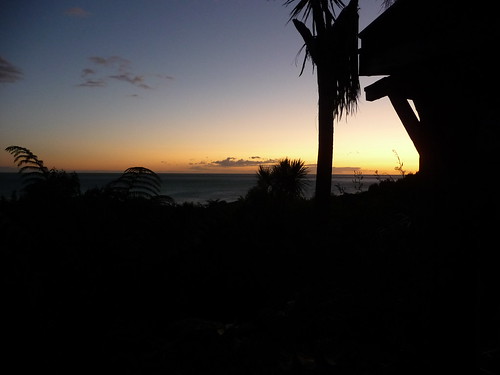
Early morning departure
Golden Bay

Town » Wanaka
Suburb » Port Chalmers, Dunedin
National Park » Mt. Aspiring
Body of Water » Golden Bay
Surf Spot » Raglan
Neighborhood » Ponsonby, Auckland
Accommodation » Billy Browns, Port Chalmers

Favorite Food and Drink…

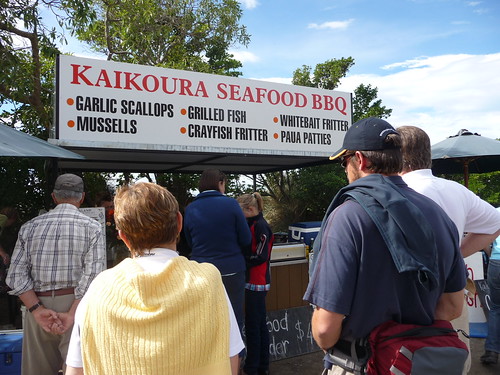
Kaikoura Seafood BBQ

Restaurant Dining »The White House, Wanaka
Fine Dining Experience » Herzog Winery Restaurant
Roadside Dining » Kaikoura Seafood BBQ
Fish and Chips » Fresh Fish Market in Tauranga
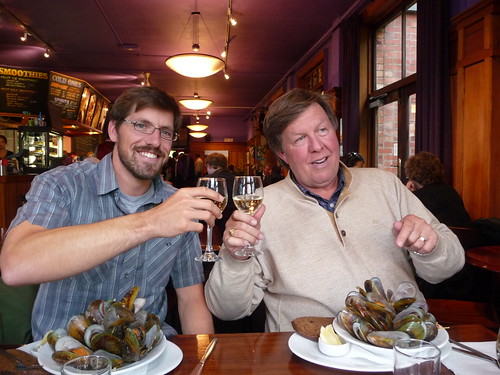
Favorite NZED dish » Evan, Green Lipped Mussels »Tina, Pumpkin Soup
Wine » (the list is long, refer to our favorite NZED Wine Post…coming soon)
Brewer » Mac’s
Beer » Renaissance American Pale Ale
Bar » Smash Palace, Gisbone
Coffee shop » Agnes Curran, Ponsonby, Auckland
Juice » Charlie’s Honest Fejoia Smoothie
Gelato » Patagonia, Queenstown
Cheese » Whitestone, Tina, Monte Cristo Evan, Winsor Blue
Trailside snack » RJ’s Licorice and Cantebury Biltong Beef Jerky
Farmer’s Market » Matakana

Favorite Outdoor Adventures

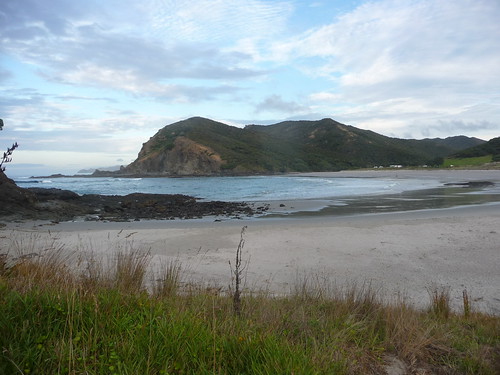
Tapotupotu Bay Beach
Tapotupotu Bay, Northland

Drive » Milford Road
One Day Hike » Rob Roy Glacier, outside Wanaka
Muli-Day Trek » Kepler
View » Summit of Alex Knob Trek, Franz Josef Glaicer area
Camping Spot » Tapotupotu Bay, Northland
Place to Swim » “The Cove” at Red Beach
Beach for Walking/Running » Mt. Maunganui
Botanical Gardens » Christchurch
Golf Course » Wairakei Golf Course

Favorite Kiwi-ana Culture

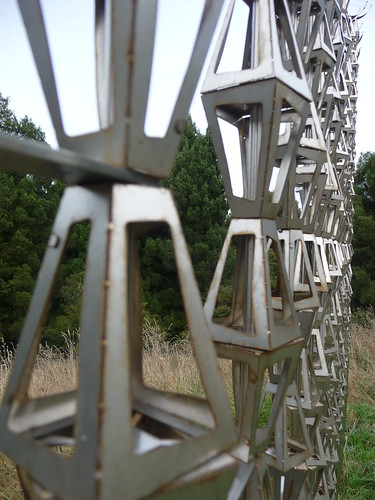
Close up
Brick Bay Sculpture Trail

Tour » Footprints Waipoua (Night tour of the Kauri Forest)
Museum » Te Papa, Wellington
Movie » Topp Twins Documentary
Artists » Evan, Craig Potton Tina, Ingrid Anderson
Art Exhibit » Brick Bay Sculpture Trail
Sayings » “Sweet As…”

Favorite “Mike-isms” (because we can’t resist…)

* A term that we coined while spending a few weeks with Mike McBride to describe the funny things he would say.

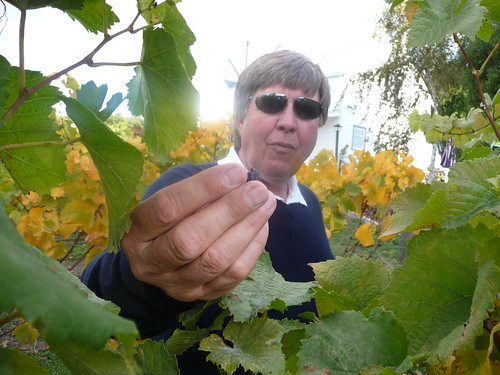
Tasting the grapes
The man, the myth, the legend

Commenting on gal who appeared to have had plastic sugury on her face, my dad said “she looked as though she had kissed the side of a freight-train.”

A tribute to the Hoon

It is with both sadness and joyous relief that I hereby report the following news: THE HOON HAS BEEN SOLD! Indeed, what a relief it is, especially after the broo-ha-ha we went through to sell it. If you have a spare 4 hours sometime I’ll tell you the entire story. The quick and dirty version is that we ran into one problem after another in trying to repair a small leak in the power-steering pump and it escalated into the ignition & alarm system. All the while I was courting two Argentinian buyers who barely spoke English and by the way I barely speak Spanish.

However, at the end of the day it all worked out and now Julian & Ignosio join the long list of owners who will have the pleasure of adventuring around NZ in the Hoon. If the Hoon could tell what stories it would tell. We had the Hoon for only 1/24th of it’s current life-span. It took us over 10,000 km’s (6,200 miles for all you non-metric understanding peep’s) from the Northland on the North Island all the way to Invercargill on the South Island and back.

Over mountains, through river fords, on ferries, or in the city the Hoon performed beautifully. Here is a photo-tribute to the Hoon meant to thank this fine vehicle for all its hard work during the time we owned it:

classy huh?
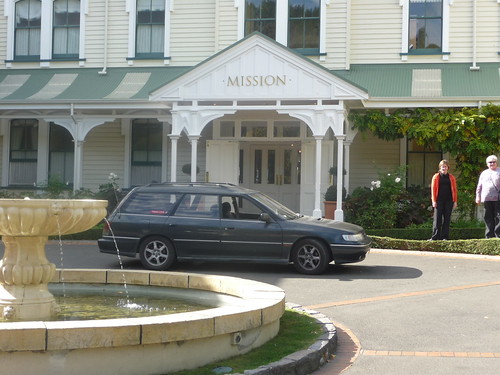
The un-stately Hoon parked in front of the stately Mission Winery in Hawkes Bay
Tina Trecker
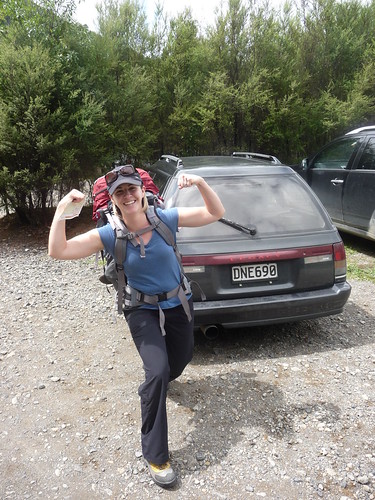
Tina flexing with the Hoon in the background- somewhere on the Coromandel Peninsula
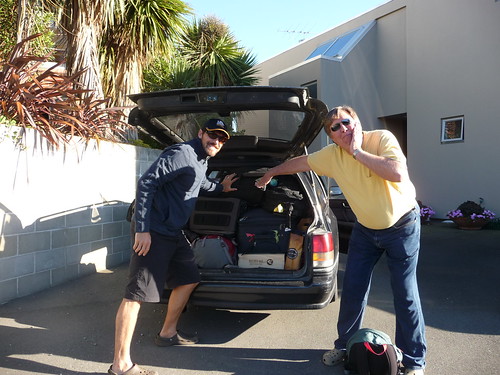
Packing the HOON
Big Mike utterly amazed at the amount of luggage the Hoon can hold
Amy and Adam
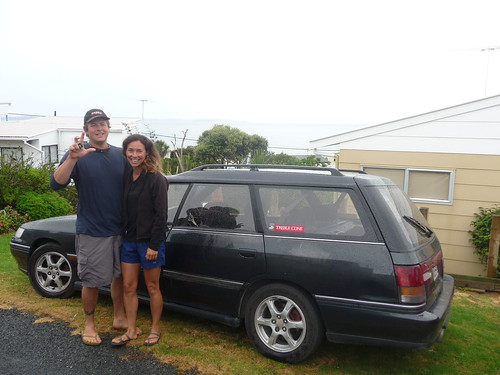
Previous owners Adam & Amy with the Hoon
P1030671
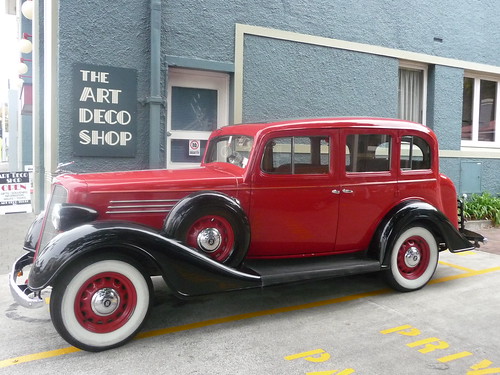
The Hoon is probably a descendent of this car we saw in Napier

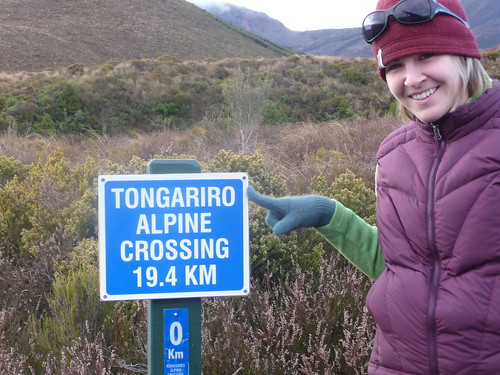
Crossing the Tongariro

Tongariro Crossing

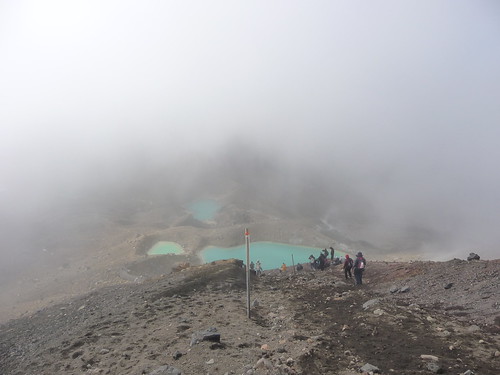
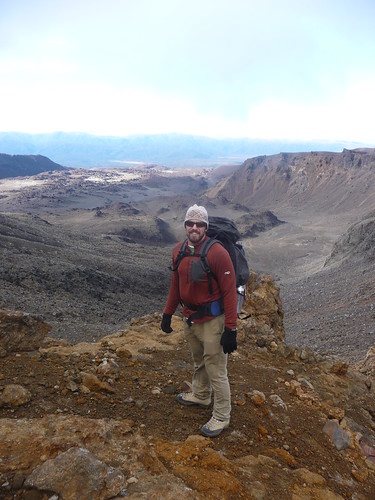
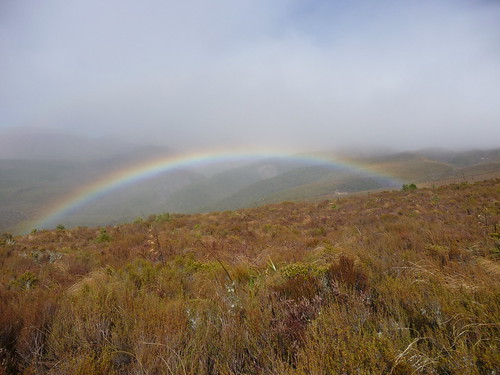
Another great adventure has been had. Yesterday Evan and I hiked the Tongariro Alpine Crossing in the Tongariro National Park in the central part of the north island. It’s one of the most beautiful places we have trekked on our journey. (It’s rated one of the best day treks in all of New Zealand.) The 19 Kilometer (12 mile) hike leads though volcanic terrain and then gains steep elevation to the saddle of the South and Red Crater which are sandwiched between two volcanic peaks, Mt. Ngauruhoe (2287m) and Mt. Tongariro (1967m). Despite the reports for bad weather descending upon us we were able to reach the top before experiencing it’s fierce blow. Thank goodness I had Evan to hold onto as we battled the winds, as I think I might have blown right off the crater. It was quite a challenging experience, but we were rewarded with amazing views of the Emerald Lakes and the two volcanic peaks. We were greeted with sunshine upon the decent and a beautiful rainbow. A hot shower and a home-made burger on the “barbie” were are final rewards. Ahh, this is life.

the clouds parted for the emerald lakes

Ev on the Tongariro Crossing

Rainbow surprise

Teeing it up in N-Zed!

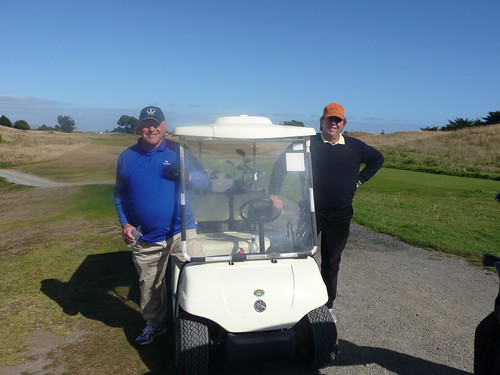
When it comes to international golf destinations most Americans probably don’t even consider New Zealand. However, you may be surprised to know that NZ has more golf courses per capita than any other country in the world. Many of them appear to be laid back municipal tracks which are are very reasonably priced. But there are also some real gems, four of which my dad and I had the pleasure of playing over the past couple weeks.

Preface: For those of you who don’t know my father let me just say that he is an avid golfer. He religiously plays a round of golf each Saturday of the year (and usually sneaks in at least 9 holes during the week). This may not sound all that impressive except that he lives in rainy Portland where the conditions aren’t very inviting for 8.5 months of the year.

That said, I knew that if he was going to make the effort to fly around the world to visit us I’d better line up some good golf.

Here is a brief summary of the courses we played:

Paraparaumu

Paraparaumu golf club sits about 30 minutes north of Wellington on the Kapiti Coast. It has held the NZ Open 12 times and was named in top 100 courses in the world back in 2001. best-course-shot-used-in-promotion

This course is a classic links style course with plenty of undulation and long grass which managed to catch a couple of my errant drives. We had great weather on the day we played even though the forecast did not look promising. Our biggest test on this day was figuring out home many ‘meters’ our rental cubs would go (for those of you who face this problem in the future a meter is about 10% longer than a yard).

Cape Kidnappers

This course is probably one of NZ’s most famous. It is situated about 20 minutes south of Napier on the cliffs overlooking Hawkes Bay. For those of you familiar with Pacific Dunes (the second course built @ Bandon Dunes) this course was desinged by the same course architect, Tom Doak. In 2005 it was named the #27 in the top 100 courses in the world. course31

Of the four courses we played this was the most scenic. This picture shows the 16th green which is perched on a cliff over 300 feet above Hawkes Bay.

This course is also a links-style design that features deep ravines and firm surfaces. But what really makes this course challenging is trying to keep your concentration while absorbed in the incredible scenery! What was also unique about this course is that the greens-keeper grazes cattle throughout the course to help his crew with the mowing!

Wairakei

Just mintues north of Lake Taupo Wairakei is the only course we played that was not a links-style design. It was built back in 1970 with the objective of creating the first in NZ to be internationally recognized as a world-class championship course. It was also listed in the top 100 courses in the world in 2005. 8th-sm1

This course sits amongst the rolling hills that surround Lake Taupo and has a classic country-club feel. The landscape on this track is the most mature of the 4 courses we played. It didn’t hurt that we caught this course near the peak time for the trees to be displaying their vibrant fall colors. Both dad and I agree that if we had to got the privelage of belonging to one of the four courses we played this would be it.

Kinloch

The owners of Kinlock Golf Club get an ‘A’ for golf but an ‘F’ for marketing. In all of the golf tourist materials I read there was not one mention of this course which is a Jack Nicklaus signature design (the only one in NZ). Fortunately for us our accommodation was only 5 minutes away so we ended up driving by and stopping in to check it out. 14th405

If you’ve ever played a Jack Nicklaus signature course you probably know how challenging they can be. Kinloch is no different. It has a slope of 137 and the course record is only 70. Playing the course I can see why. There is no let up. Every shot requires some concentration.

This course is also a links style design with the most undulation I’ve ever played on (not only on the greens but in the fairway as well). There were numerous times where I thought our golf cart was going to tip over. Furthermore, every green is protected by a brutal set of bunkers, banks, and/ or collection areas which makes it difficult to run your approach shot up the green like you can on most links style courses. If you’re a glut for punishment this is your course.

Although neither my dad or I scored well here we still enjoyed the challenge as well as the satisfaction of playing this masterpiece. We were also treated to a series of beautiful views of Lake Taupo and the surrounding hillsides.

If you’re an avid golfer and are looking for an alternative to Ireland or Scotland you should really consider NZ!

The Second of the PU’s Arrive + a dear friend

The NZ Guests

The journey continues with the addition of the second half of the PU’s (The Swansons) and our dear friend Leslie. We have spent the last few days exploring Wellington. We have been staying 75 steps above Evan’s Bay (fitting wouldn’t you say) in a lovely home we are rented where we have shared many great meals, laughs, card games and daily excursions. The guys spent one day golfing at Paraparaumu while the ladies spent the day walking along the bay, lunching in the city and browsing the shops. We all visited the farmers market and devoured the Te Papa museum. Today we ventured to Wellington Botanical Gardens and then on to Martinborough for lunch and wine tasting.

the Dads

Tomorrow we will say good-bye to the McBride crew and our friend Leslie and the Swanson’s will head north for more adventures.

Schroeder’s “The Snowball”

There are very few people in the business world that I respect more than Warren Buffett (hereby referred to as “WB”).  His skill, success, conviction, simplicity, and humor are all characteristics that I have a deep admiration for.  In the past I’ve read several books which cover WB’s investment style but lack significant biographical detail.  The latest book about his life entitled, “The Snowball and the Business of Life” fills the gap where previous books have failed by focusing on his life including details about his upbringing, family, and business.

The book was written by Alice Schroeder who covered Berkshire-Hathaway as an equity analyst in her previous career.  According to the inside cover WB & Schroeder became friends over the years.  WB eventually encouraged Schroeder to pursue a writing career and offered her unprecedented access to interview family and friends with the goal of producing a cohesive book on his life.  The results are spectacular.  With the exception of “Atlas Shrugged” this has been my favorite book that I’ve read on our trip.

If you like what WB stands for or have an interest in his investment style this book is definitely worth a read.

In reading the first part of the book about his upbringing I took notes on some of the lessons that WB learned along the way.  These lessons would ultimately help WB achieve unprecedented investment success.

Here are the lessons:

a) “Inner Scorecard”- pg. 33- from father:  WB learned to have an “inner scorecard” from his father who always made decisions based on his principles instead of following trends or crowds.  This obviously helped WB make investment decisions later on in life when Wall Street considered them unpopular (or vice versa: not make investments when Wall Street considered them popular).

b) “It might be easier to go through life as an echo, but only until the other guy plays a wrong note.“- pg. 58- from a band experience.

c) Care about opinion- pg. 62- Sidney Weinberg- When WB was young his father took him to a Wall Street investment company where he got to meet the CEO, Sidney Weinberg.  WB remembers that Weinberg paid attention to him and asked him about his opinion which he appreciated.

d) Don’t fixate on what was paid for a stock- pg. 65- self-lesson from his investment days at the age of 12!

e) Don’t rush unthinkingly for a small profit- pg. 65- self-lesson from his investment days at the age of 12!

f) Investing other’s money- a loss may make them upset- pg. 65- self-lesson from his investment days at the age of 12!

g) Know the deal in advance- pg. 74- shoveling snow for his grandfather

h) Didn’t like hard manual labor- pg. 75- working in grocery

i) Don’t criticize others- pg. 99- Dale Carnegie’s “How to Win Friends and Influence People“.

j) Calculating odds, betting when odds are in favor, emotional decision-making- pg. 108- horse racing.

k) Thinking for yourself- pg. 134- Lou Green

l) A stock is the right to run a small fraction of a business- pg. 147- Ben Graham

m) When investing always use a margin of safety- pg. 147- Ben Graham

n) Mr. Market is your servant- pg. 147- Ben Graham

o) On not allowing money to change how he lives.- pg. 186- Ben Graham

p) “It pays to hang around with people who are better than you.“- pg. 158- His experience in the National Guard

q) Power of customer loyalty- pg. 169- owning a gas station business at a young age

r) Scuttlebutt/ qualitative analysis- pg. 263- Charlie Munger (who learned it from Phil Fisher which I wrote in this book review)

s) The retailing business is about merchandising, not finance- pg. 291- H-K retail company which he bought early on in his investment career.

t) “Far better to buy a wonderful company at a fair price than a fair company at a wonderful price.“- pg. 388- Gurdon W. Wattles

u) Ovarian Lottery- pg. 646- trip to China with Bill Gates

Other notes from the book:

*WB’s memory for #’s is remarkable.  There are various points in the book where he recalls details about dates and numbers in business dealings he had had 30 years earlier.  I have also met other financially successful individuals and this is a trait that stood out in my mind with these people as well.

*Quote: “In the short run, the market is a voting machine.  In the long run, it’s a weighing machine.

*Quote: “Praise by name, criticize by category.

*On WB & Charlie Munger: “They thought alike and had the same fascination with business as a puzzle worth spending a lifetime to solve.  Both regarded rationality and honesty as the highest virtues.  Quickened pulses and self-delusion, in their view, were the major causes of mistakes.

*WB’s focus: There are multiple sections of the book that describe WB’s focus.  In one instance he is on his plane with his family.  As the plane entered a period of turbulence he kept his nose down in his papers.

*On pg. 28-29 Schroeder writes out an average day for WB.  Worth finding the book to read for yourself.

*A hilarious practical joke WB played when he was younger.  Here’s his quote about it:  “I made up a letterhead from the American Temperance Union, Reverend A. W. Paul, President.  I’d write letters to people on that letterhead saying that for years I’d lectured around the country on the evils of drink, and in these travels my appearances were always accompanied by my young apprentice, Harold.  Harold was an example of what drink could do to men.  He’d stand there on stage with a pint, drooling, unable to comprehend what was going on around him, pathetic.  Then I said that, unfortunately, young Harold died last week, and a mutual friend had suggested that you might be a replacement for him.

*By the time WB was a senior in high school he had the following income sources:
a newspaper route, calendar sales, magazines sales, golf balls, car buffing business, and pinball machines.  In each of these instances he’d fund the business and hire a “partner” to do the work.  With his work he was earning more money than his teachers.

*WB originally began as a stockbroker but did not like the conflict of interest  that was inherent in the stockbroker- client relationship.

*Investing in yourself for 1 hour each day- “Charlie (Munger), as a very young lawyer, was probably getting $20 an hour.  He thought to himself, ‘Who’s my most valuable client?’ And he decided it was himself.  So he decided to sell himself an hour each day.  He did it early in the morning, working on these construction projects and real estate deals.  Everybody should do this, be the client, and then work for other people, too, and sell yourself an hour a day.

*On page 253 WB likens his value approach to investing as “buying dollar bills for forty cents…“.

*One of the main engines of growth for WB in his career is the ‘float’ money he receives through his insurance business.  Through ‘float’ his business received insurance premiums in advance of paying our claims.  During the time in which his insurance business had the money he was able to invest the funds and earn a return.  This profit on the money is what is known as ‘float’.  Banks also have a business structure that profits from ‘float’.

*Retail businesses are very difficult to invest in.  Charlie Munger explains: “Retail is a very tough business…  Practically every great chain-store operation that has been around long enough eventually gets in trouble and is hard to fix.  The dominant retailer in one twenty-year period is not necessarily the dominant retailer in the next.

*WB’s methodology for buying stock/ companies: “…estimate an investment’s intrinsic value, handicap its risk, buy using margin of safety, concentrate, stay in the circle of competence, let it roll as compounding did the work.

*From 1978 to 1983, the Buffett’s net worth increased from $89 million to $680 million.

*On page 514-515, the book describes the era of junk-bonds & hostile take-overs.  It sounded a lot like the 2003-2005 when financing was cheap.  The new name for “hostile take-over” however was “private equity”.

*Munger & WB on defining risk as volatility- they thought it was “twaddle and bullshit“.

*Schroeder provides a great explanation of derivatives on page 544.

*Chapter 48 covers the Salomon Brothers debacle where WB temporarily served as CEO.  In a great section of the chapter the author defines Munger’s term “thumb-sucking” as not speaking up or handling an problem as soon as it arises.  In the end leadership at Salomon at the time of the problems were guilty of “thumb-sucking”.  Had they acted fast and been transparent they likely would have avoided the issues.

*WB’s ‘front-page rule’ for conduct: “I want employees to ask themselves whether they are willing to have any contemplated act appear the next day on the front page of their local paper, to be read by their spouses, children, and friends, with the reporting done by an informed and critical reporter.

*When asked what one factor was most important in getting to where he’d gotten in life WB said, “focus”.  It turns out that Bill Gates at the same dinner replied with the same answer.

*Schroeder describing WB’s focus: “This kind of focus couldn’t be emulated.  It meant the intensity that is the price of excellence.  It meant the discipline and passionate perfectionism that made Thomas Edison the quintessential American Inventor, Walt disney the king of family entertainment, and James Brown the godfather of soul.

*The book covers briefly WB’s idea of the “institutional imperative” which is defined as, “the tendency for companies to engage in activity for its own sake and to copy their peers instead of trying to stay ahead of them.”  Obviously, WB isn’t too keen on buying companies that suffer from the institutional imperative.

*Munger & WB on using math models for investment decisions: “…using models to make investment decisions was like driving a car on cruise control.  The driver might think he was fully alert and attentive, but would find out differently when the road turned winding, rain-slicked, and full of traffic.

*WB’s advice for college graduates: “…go to work for whom they admire the most.

*As WB became more famous he got more demands on his time.  Here is how Schroeder described how he handled it:  “He did only what made sense and what he wanted to do.  He never let people waste his time.  If he added something to his schedule, he discarded something else.  He never rushed.  He always had time to work on business deals, and he always had time for people who mattered to him.

*WB describes an ideal business: “The ideal business is one that earns very high returns on capital and that keeps using lots of capital at those high returns.  That becomes a compounding machine.  So if you had your choice, if you could put a hundred million dollars into a business that earns twenty percent on that capital-twenty million-ideally, it would be able to earn twenty percent on a hundred twenty million the following year and on a hundred forty-four million the following year and so on.  You could keep deploying capital at those same returns over time.

The first of the “PU’s” arrive

Written by my wife Tina:

The first of the PU’s (aka Parental Units) have arrived in NZED! We are thrilled to continue our journey through NZED with our parents by our sides. The McBrides will be spending the next two weeks being vagabonds with us as we travel north along the east coast of the north part of the south island (Got that?). We will be joined by the other half of the PU’s, The Swansons, on the tip of the south end of the north island (that too?) in a few weeks and this island nation will probably never be the same!

Green Lipped

Although, slightly jet lagged we had the PU’s out yesterday seeing the sights of Christchurch…the arts center...lunch complete with green lipped muscles and savy-b…a walk along the Pacific Ocean beach and finally an afternoon coffee. We steamed up some delicious blue cod for dinner that we bought at the local fish market and sent them off to bed for some well deserved ZZZ’s.

Beach Walking

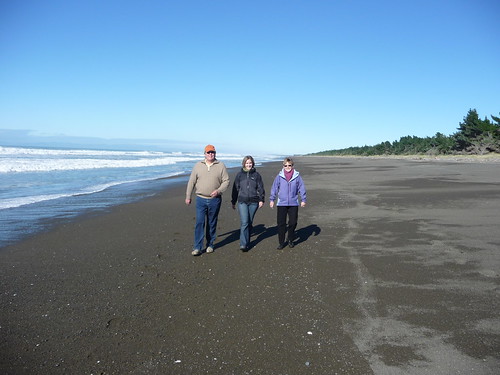
Today we had a long walk on the beach in Leithfield, north of Chrsitchurch, on the east coast of the north end of south island (You’ve got it, right?). The sun was shinning and we had the beach to ourselves. We lunched at Pegasus Bay Winery in the garden warmed by the autumn sunshine and the PU’s got their first authentic taste of the awesome NZED wines. The nap afterward was essential.

We will spend the next few days exploring the Canterbury region before we head north. Sightseeing, fishing, wine tasting, walking and of course eating are all a part of the plan.

An ”Old Bones” Sunrise

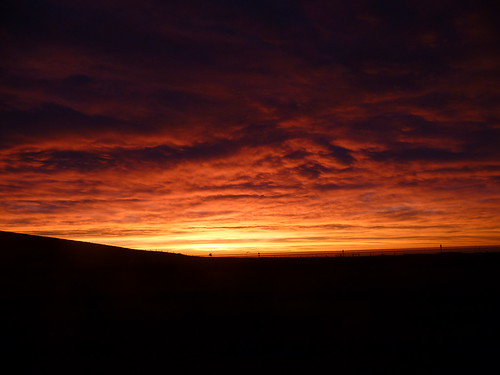
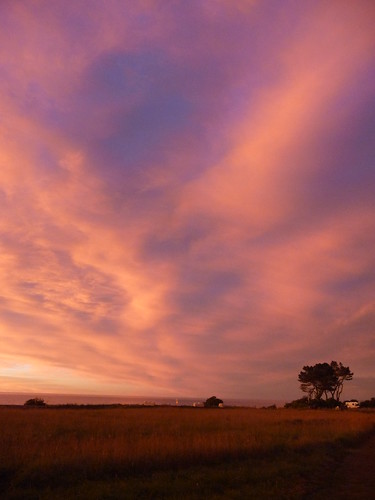
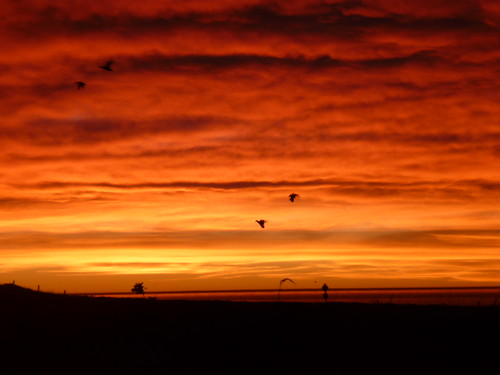
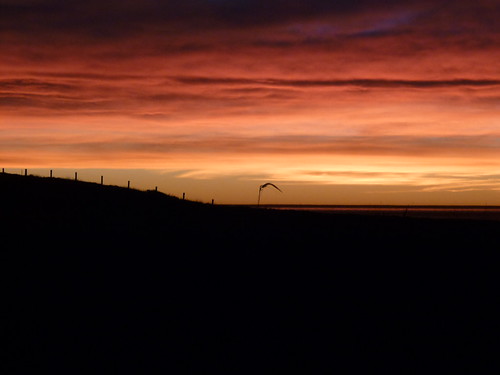
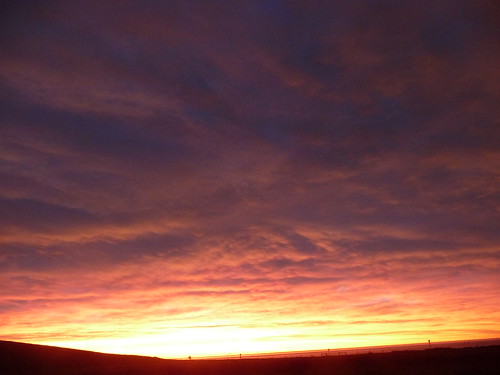
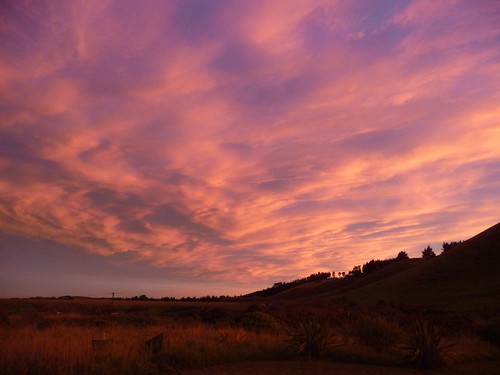
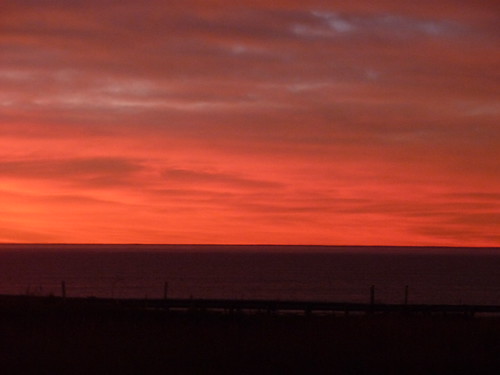
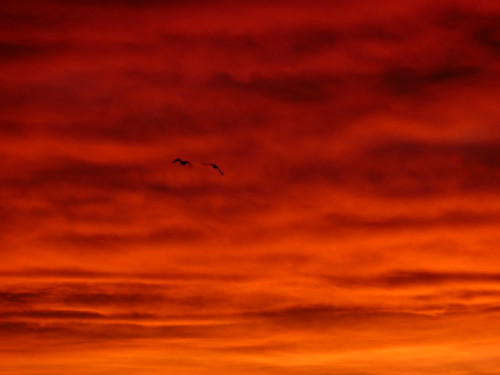
We’re currently staying at a backpackers called “Old Bones” just south of Oamaru on the east coast of the south island. This morning I awoke to the most amazing sunirse I’ve ever witnessed. I’ll let the picures do the talking:

Old Bones Sunrise Series
1st picture taken looking north
Old Bones Sunrise Series
Cloud formation in sky
Old Bones Sunrise Series
Birds flying over the field
Old Bones Sunrise Series
Solo piece of hay
Old Bones Sunrise Series
Looking north again 20 minutes after 1st picture
Old Bones Sunrise Series
Cloud formation #2
Old Bones Sunrise Series
Colorful sky looking east
Old Bones Sunrise Series
More birds flying around looking for breakfast