Although mortgage note rates are unchanged from Monday the accompany closing costs are slightly lower so in fact the rate environment has improved modestly this week.
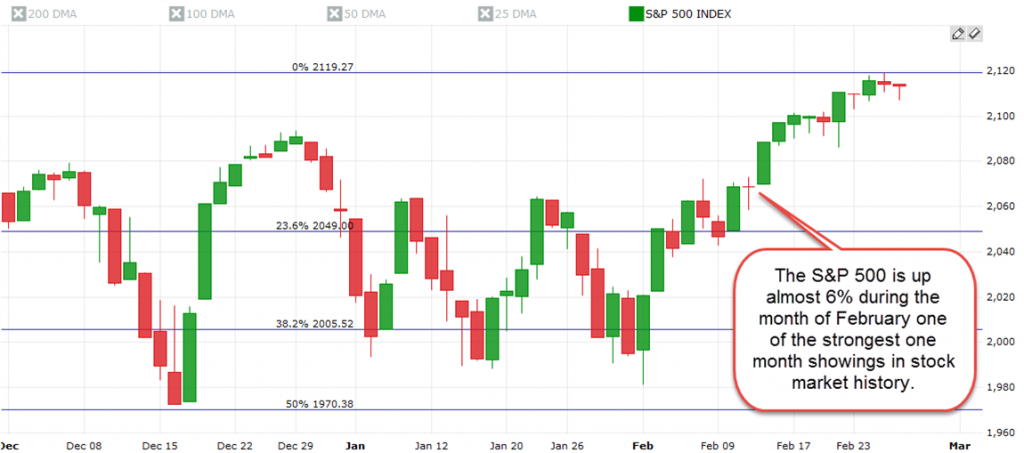
More and more analysts are calling for a stock market correction. The S&P 500 is up almost 6% during the month of February. It’s one of the largest one month climbs in stock market history. Should stocks reverse and move lower it would likely help interest rates improve.
Fed Chairwoman Janet Yellen testified to lawmakers back in Washington DC the past two days. Her comments were in line with what the Fed has been signaling through their post monetary policy meetings. In effect, the Fed stands ready to raise short term interest rates but the economy still has some room for improvement. Furthermore, inflation remains very low.
Speaking of inflation deflation, this morning’s Consumer Price Index (CPI) report showed that prices at the retail level of the US economy fell by .1% on a year-over-year basis. This is not a huge surprise given that oil prices have fallen so dramatically over the past few months. When you strip out food and energy prices rose by 1.6%. Inflation is the primary driver of interest rates so as long as inflationary pressure remains weak rates should remain relatively low.
From a technical perspective mortgage-backed bonds are trading near technical support and the US 10-year treasury yield is trading up against it’s 50-day moving average. Should those technical levels hold it would likely push rates modestly higher in the near term.
For transactions that need to lock in the next week or two it would probably make sense to protect the current level of rates. For longer-term closings it may make sense to float and wait to see if the stock market moves lower.
Current Outlook: near-term locking bias, longer term float