Mortgage rates have finally broken outside of the tight .125% range they’ve remained within since the beginning of April. Unfortunately they’ve broken out in the wrong direction.
In yesterday’s Fed statement officials reiterated their stance that they are prepared to raise short-term interest rates but that they will not begin that process until conditions in the labor market improve and inflation moves towards 2.00%.
Speaking of….. the Fed’s favorite gauge of inflation known as the Personal Consumption Expenditure Price Index (PCE) was released this morning and showed very tepid price pressure. When stripping out volatile food and energy prices inflation was just 1.3% for the past year.
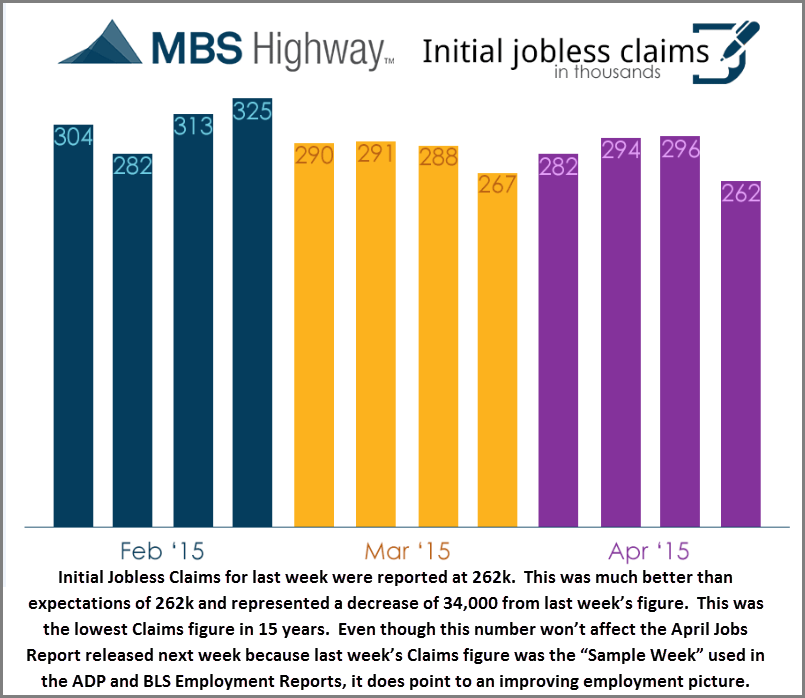
However, in a separate release from the Labor Department the Employment Cost Index showed that wage and benefit costs for employers rose by 2.6% during the first quarter of 2015 after increasing by only 2.2% in the second half of 2014. An acceleration in labor costs could signal wage-based inflation which could be the catalyst for higher inflation and interest rates in the future. Furthermore, weekly jobless claims for last week were at the lowest level in 15 years. Good news for the economy is often bad news for mortgage rates.
From a technical perspective the picture is not terribly encouraging. The US 10-year treasury yield, which mortgage rates loosely follow, is up ~.2% in the past three days. Mortgage rates have risen .125%-.25% and we could see things get worse before they get better.
Current Outlook: locking bias